
Your friend texts you at 9 pm: “Going out tonight. DWU.”
Are they telling you to go to sleep? Are they ending the conversation? Are they annoyed?
Here is the short answer: DWU means “don’t wait up”. Your friend is heading out, they will probably be late, and they are telling you not to stay awake waiting for them. It is a friendly heads-up, not a goodbye and not a brush-off.
In this guide you will see DWU in real chats, learn where the phrase comes from, find out when it sounds caring and when it sounds careless, and pick up replies that fit every version of it.
What Does DWU Mean in Text?
DWU stands for Don’t Wait Up.
That lead is unusually solid for a texting term. CyberDefinitions gives “Don’t Wait Up” as its quick answer for DWU and calls it the most common meaning in texting. Dictionary.com agrees word for word, defining DWU as an internet acronym for “don’t wait up”, meaning “don’t stay awake waiting for someone to arrive or make contact”. The top niche guides for “DWU meaning in text” agree as well. Three independent layers, one answer. That is exactly the kind of agreement this site requires before calling a meaning the lead.
Quick definition: DWU means “don’t wait up”. It is used in texts and chats to tell someone not to stay awake, not to hold up plans, and not to expect a reply until later, usually because the sender is going out or will be away from their phone.
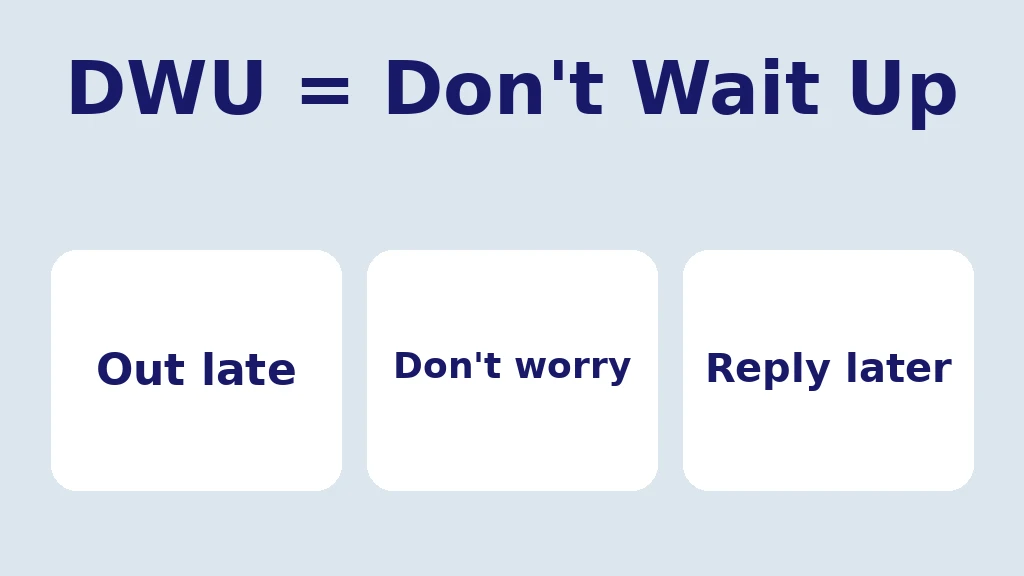
There is a second shade to the phrase that matters. Dictionary.com notes that “don’t wait up” is also casually used to mean “don’t worry about me”. So DWU can be literal, about sleep and waiting, or softer, about worry. In most chats both shades are present at once: “go to bed, I am fine, I will catch you tomorrow.”
DWU Meaning in Easy Words
Think of DWU as a polite permission slip.
Normally, when someone you care about is out late, you wait. You check your phone. You wonder if they got home safe. DWU gives you permission to stop waiting:
DWU = “Go on with your evening. I will be late, and I am fine.”
It is the texting version of leaving a note on the kitchen table that says “do not wait up for me, I have my key”. The sender is thinking about the other person’s evening, not just their own plans, which is why DWU usually feels considerate rather than rude.
The one exception is tone. Sent warmly, DWU is caring. Sent coldly after an argument, it can feel like “do not bother waiting for me either”. The words are the same. The relationship and the moment around them decide the feeling.
Where Is DWU Used?
DWU shows up wherever people manage evenings, plans, and late replies. Common places include:
- Text messages between partners, family, and housemates
- WhatsApp chats before a night out
- Instagram and Snapchat DMs when someone goes offline for the evening
- Group chats where one person warns they will be unreachable
- Messages to a parent or roommate about coming home late
Example situations:
- A friend heads out with friends and will not be home until after midnight
- A partner goes to a late dinner and tells the other to sleep first
- A teenager tells a parent not to wait by the door
- A colleague leaves a work trip message saying replies will wait until morning
- Someone ends a chat for the night without a long goodbye
DWU is less common in public comments, because it is a personal message to someone who might actually wait for you.
Why Do People Use DWU?
It is considerate
The kindest reason is also the most common. Nobody wants their partner, parent, or roommate sitting awake worrying. DWU removes that worry in three letters.
It sets expectations fast
Without DWU, the other person might keep checking their phone or hold dinner back. With DWU, everyone knows the plan: no waiting, no held food, no midnight check-in expected.
It ends a chat cleanly
Some conversations do not need a long goodbye. DWU closes the chat for the night while still sounding warm, which beats simply going silent.
It keeps a playful tone
Dictionary.com notes that DWU is often used as a playful alert that someone is going out late, sometimes to party. Among friends, it can carry a cheerful “big night ahead” energy rather than a serious warning.
Real-Life Examples of DWU
Here is how DWU actually looks in real chats, with the meaning spelled out each time:
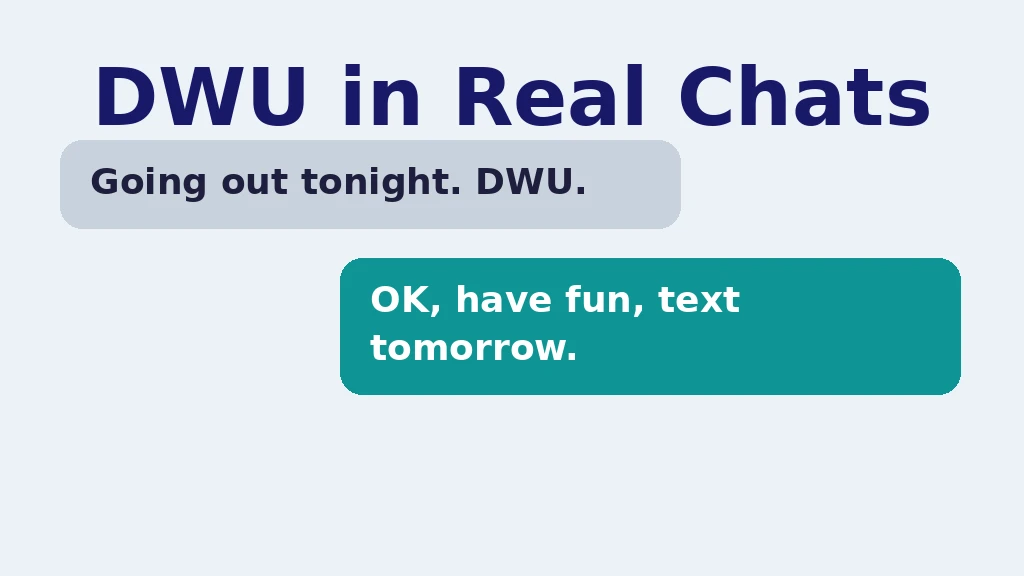
Example 1:
- Friend: “Going out tonight. DWU.”
- You: “OK, have fun, text tomorrow.”
Meaning: I am going out and will be late, so do not stay up waiting for me. The reply accepts the plan warmly.
Example 2:
- Partner: “Dinner ran long, DWU, I will be home after midnight.”
- You: “Got it, sleep well when you get in.”
Meaning: Do not wait up for me tonight. The time detail makes the message even clearer.
Example 3:
- Teen: “At Sarah’s, DWU, I have my key.”
- Parent: “OK, be safe.”
Meaning: Do not wait by the door. The key detail reassures the parent that the teen can get in alone.
Example 4:
- Friend: “Heading offline for the night, DWU for a reply.”
- You: “No worries, talk tomorrow.”
Meaning: Do not wait for a reply tonight. This is the “do not expect a message” shade rather than the sleep shade.
Example 5:
- Friend: “You looked tired earlier. DWU, I mean it, get some rest.”
Meaning: Do not worry about me. Here DWU leans into its softer sense, telling the friend to rest instead of waiting.
DWU vs Similar Internet Terms
| Term | Meaning | When to use it |
|---|---|---|
| DWU | Do not Wait Up | You will be late or offline, no waiting needed |
| BRB | Be Right Back | You will return in minutes |
| BBL | Be Back Later | You will return later today |
| GN | Good Night | You are going to sleep yourself |
| TTYL | Talk To You Later | Ending a chat, no time promise |
Key difference: BRB and BBL promise a return, while DWU promises a delay. BRB says “wait a few minutes”. DWU says “do not wait at all”. Mixing them up gives the other person the exact opposite instruction, so pick carefully.
DWU also differs from GN. GN means you are going to sleep. DWU means the other person should feel free to sleep while you stay out. If you want the classic short return term for comparison, here is what BRB means in text and why it is the wrong choice for a whole evening away.
DWU Variations You Should Know
“Dat’s what’s up” (confusion to avoid). Dictionary.com explicitly warns against confusing DWU with the initialism for “dat’s what’s up”. That phrase agrees that something is cool. It has nothing to do with waiting, and using it in a late night message would confuse everyone.
“Dreaming with you” (romantic claim). One guide lists this as a sentimental use between partners. It has no dictionary support and should never be assumed. If a partner writes DWU, the safe reading is “don’t wait up”, not a romantic code.
“I’m done with you” (breakup reading). Weak guides list this and similar readings like “don’t want you”. They appear when people try to expand DWU backwards from a fight, but no dictionary supports them. If a message feels like a breakup, the rest of the conversation will make that clear. DWU alone does not mean it.
Lowercase “dwu” vs capital “DWU”. Lowercase feels casual and chatty, like a quick note before heading out. Capital DWU in a formal document usually means a university name, such as Divine Word University or Dakota Wesleyan University. Case and context together tell you which world you are in.
“DWU?” with a question mark. A few weak guides read DWU as “do you want” or “do you understand” when it ends with a question mark. That reading has no dictionary support either. If someone writes “DWU?” they most likely mean “should I not wait up?” or they made a typo, so ask rather than guessing.
How to Reply to DWU
Your reply depends on who sent it and what evening they are describing.
If a friend is going out: keep it light. “Have fun, text tomorrow” or “Enjoy, no waiting here” matches their energy.
If a partner or family member is coming home late: reassure them. “Got it, sleep well when you get in” or “OK, be safe” shows you heard the message.
If you were waiting for a reply: accept the delay cleanly. “No worries, talk tomorrow” ends the thread without pressure.
If the tone feels cold after a fight: do not escalate by text. A calm “OK, let me know when you are home” keeps the door open, and the real conversation can wait until morning.
If you are the sender: add one detail and DWU becomes much kinder. “DWU, home after midnight” or “DWU, I have my key” removes all worry in a single line. And if your plans change and you will be home early after all, say so, so nobody sleeps through your return.
For a goodbye that is about leaving a chat rather than a late night, here is what CYA means in text.
When to Use DWU (and When to Avoid It)
Good situations:
- Telling a partner, parent, or roommate you will be home late
- Ending a chat for the night without going silent
- Warning a friend that replies will wait until tomorrow
- A playful heads-up before a big night out with friends
Avoid using DWU when:
- The message is for work, a teacher, or anyone formal
- Someone is genuinely worried about your safety and needs a real update
- You are mid-argument, where it can read as dismissive
- The other person is waiting for an important answer, not just your company
Common Misunderstandings About DWU
It does not mean goodbye forever. DWU ends the evening’s waiting, not the relationship. A normal DWU is followed by a normal chat tomorrow.
It does not mean “do not text me”. It means “do not wait for me”. A morning message is still welcome, and usually expected.
It is not the same as “dat’s what’s up”. That phrase is agreement, not a late night warning. Dictionary.com flags this confusion directly, so do not mix them.
It is not automatically rude. Most DWU messages are considerate: the sender is thinking about your sleep. It only turns cold when the conversation around it is already tense.
Frequently Asked Questions
What does DWU mean in text?
DWU means “don’t wait up”. It tells someone not to stay awake waiting for you, not to hold up plans, and not to expect a reply until later, usually because you are going out or will be offline.
What is the full form of DWU?
The full form of DWU is “don’t wait up”. It comes from the everyday phrase used when someone leaves home for the evening and tells others to go to bed without them.
What does DWU mean on Snapchat and Instagram?
It means the same thing everywhere: “don’t wait up”. On Snapchat and Instagram it usually appears in DMs when someone goes out for the night or offline, and it means replies will wait until later.
Is DWU rude?
Usually not. Most DWU messages are considerate, because the sender is freeing you from waiting. It can feel dismissive after an argument or when someone needed a real update, so save it for casual, caring contexts.
Does DWU mean “I’m done with you”?
No. That reading appears in weak guides but has no dictionary support. CyberDefinitions and Dictionary.com both give “don’t wait up” as the meaning. If a message feels like a breakup, the rest of the conversation will show it, not DWU alone.
How do you reply when someone sends DWU?
Keep it warm and simple: “Have fun, text tomorrow” for a friend, or “Got it, be safe” for family. If you were waiting for a reply, “No worries, talk tomorrow” accepts the delay without pressure.
Related Texting Slang
Keep exploring the dictionary: the meaning of GBTS, what GFN means in a text, how people actually use GTB, HBU in chats and texts, GN, explained with real examples.
Final Thoughts
DWU is one of the kinder shortcuts in texting. Three letters tell someone they can sleep, eat, and carry on with their evening without waiting for you, and that thoughtfulness is why it has lasted since the early days of texting shorthand. Use it when you will genuinely be late, add one detail about when you will be back, and answer it with the same warmth when it lands in your own chats.
The dictionaries settle the meaning without any doubt. Dictionary.com defines DWU as “don’t wait up”, meaning do not stay awake waiting for someone to arrive, and CyberDefinitions gives the same quick answer, calling it the most common texting meaning. With both references agreeing, there is no need to guess at the weaker readings.
11 thoughts on “DWU Meaning in Text | The Polite Way to Disappear for the Night”