
You text a friend, “Want to grab coffee later?” and the reply comes back short: “Sorry, DWS rn.”
No explanation. No detail. Just three letters and a promise to talk later.
Here is the short answer: DWS usually means “dealing with stuff”. Your friend is busy, stressed, or handling something personal, and they are telling you that in the fastest way possible, without turning their private business into a group chat announcement.
In this guide you will learn exactly how DWS works, why some guides write it as “dealing with something” instead, what it means on different platforms, and how to reply in a way that actually helps.
What Does DWS Mean in Text?
DWS stands for Dealing With Stuff.
That is the lead meaning across the niche texting guides that cover this term. Some write the clean version, “dealing with something”, and some write the blunt version, “dealing with sh*t”. They are the same sense with different politeness levels, not two different meanings. The polite form is the one to use in mixed company, and it is the form this article uses.
It is worth being open about the evidence here. CyberDefinitions has no entry for DWS, and Dictionary.com has no DWS acronym entry either, so this lead does not come from a dictionary. It comes from agreement across independent texting guides, whose top results lead with “dealing with something” or “dealing with stuff”.
Quick definition: DWS means “dealing with stuff”. It is used in texts and chats to say “I have a lot going on right now, so I may be slow to reply”, without explaining what the stuff is.
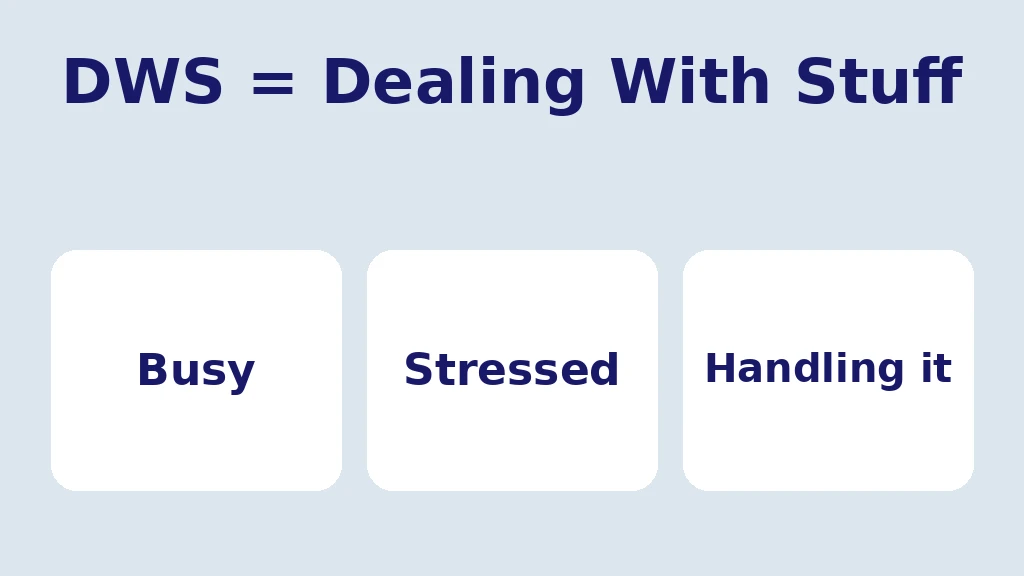
The beauty of DWS is its vagueness. “Stuff” can be work stress, family drama, a pile of chores, a bad mood, or all of them at once. The sender picks how much to share, and the reader is expected to respect that boundary.
DWS Meaning in Easy Words
Think of DWS as a softer, more human version of “I am busy”.
“I am busy” can sound cold or dismissive. DWS says something warmer:
DWS = “Life is a lot right now, and I am handling it.”
It is the texting equivalent of holding up a hand and saying “give me a minute” while you juggle three things at once. The person is not ignoring you. They are not angry with you. They are just occupied, and they wanted you to know that before you wondered why the reply was short or late.
That is also why DWS usually arrives on its own or at the end of a short message, like “Sorry, DWS rn” or “Haven’t been online much. Just DWS.” It is an explanation and an apology in three letters.
Where Is DWS Used?
DWS lives in private, casual messaging more than in public posts. You will see it most often here:
- WhatsApp chats with friends and family
- Instagram DMs when someone goes quiet for a few days
- Snapchat private chats and stories about being overwhelmed
- SMS replies when someone cannot talk right now
- Group chats where one person explains a late reply to everyone at once
Example situations:
- A friend has exams, a work deadline, and a family issue in the same week
- Someone is moving house and their phone is the last priority
- A person feels low and does not want a long conversation about it yet
- A colleague is swamped and keeps a reply short on purpose
- A group chat member explains why they missed the last few messages
Why Do People Use DWS?
It protects privacy
Full honesty takes effort and trust. “Dealing with stuff” lets someone be honest that life is hard without listing the hard parts. That boundary matters, especially in a group chat where not everyone needs the details.
It is faster than an explanation
Typing out “Sorry I have been quiet, work has been stressful and my car broke down and I have family visiting” takes time and energy that a stressed person may not have. DWS does the same job in three letters.
It softens a late or short reply
Silence can feel like rejection. A quick DWS tells the other person “it is not you, it is my week”, which keeps the friendship steady even when replies slow down.
It asks for space without a fight
Some people find it hard to say “leave me alone for a bit”. DWS is a gentler way to ask for that space. It says “I need time” without sounding harsh.
Real-Life Examples of DWS
Here is how DWS actually looks in real chats, with the meaning spelled out each time:
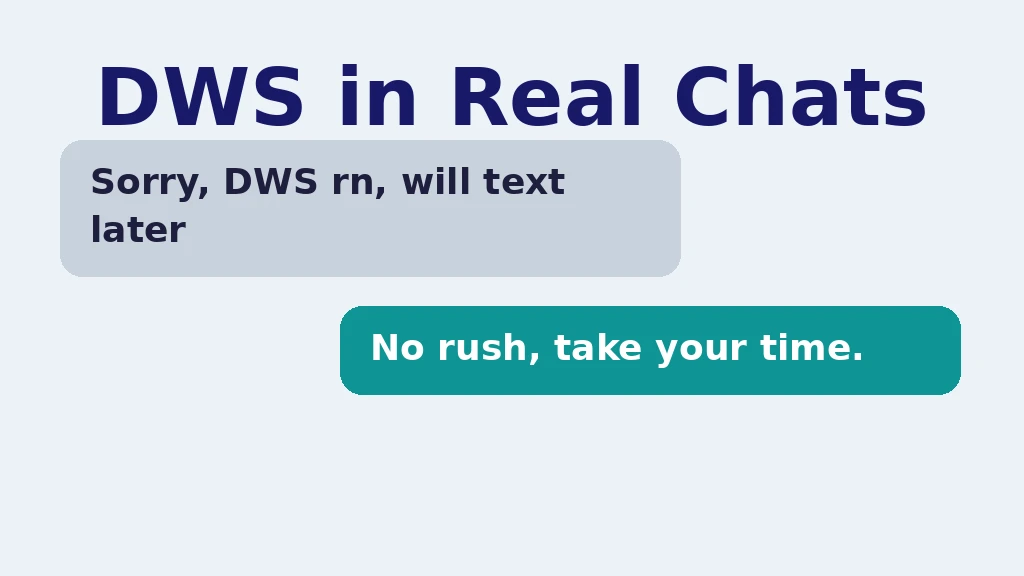
Example 1:
- Friend: “Hey, can we talk later?”
- You: “Sorry, DWS rn, will text later.”
Meaning: I am tied up right now, but I will reply when I can. This is the most common DWS use of all.
Example 2:
- Friend: “You have been quiet this week, everything OK?”
- You: “Yeah, just DWS. Nothing serious, just a lot at once.”
Meaning: I am handling several things, but I am fine. The extra sentence reassures the friend without oversharing.
Example 3:
- Group chat: “Sorry I missed the plan, DWS at home.”
Meaning: A home issue kept me away. No detail given, and none expected.
Example 4:
- Friend: “Want to come to the party Saturday?”
- You: “DWS this weekend, so I will have to skip it.”
Meaning: A polite no, with a reason that does not invite twenty follow-up questions.
DWS vs Similar Internet Terms
| Term | Meaning | When to use it |
|---|---|---|
| DWS | Dealing With Stuff | You are busy or overwhelmed, details private |
| DW | Do not Worry | Reassuring someone else, not describing yourself |
| BRB | Be Right Back | You will return in minutes, not days |
| BBL | Be Back Later | You will return later today, short absence |
| IDK | I Do not Know | You lack an answer, not time or energy |
Key difference: BRB promises a fast return, while DWS promises nothing about timing. It only explains the delay. If you will be back in five minutes, say BRB. If your week is a mess and you do not know when you will be free, DWS is the honest choice.
DWS also differs from DW in direction. DW reassures the other person (“do not worry”), while DWS describes your own situation (“I am dealing with stuff”). Mixing them up flips the message. If you want the classic quick return term, here is what BRB means in text and how it compares with a longer, vaguer absence like DWS.
DWS Variations You Should Know
“Dealing with something” (clean variant). This is the same sense in polite form, and it is the version most guides lead with when they want a family friendly article. Use this form at work, with family, or anywhere the blunt form would feel wrong.
“Dealing with stress” (narrower variant). Some guides lead with this, and it fits when the “stuff” is mainly pressure or worry. It is best read as a specific case of the wider “dealing with stuff” sense, not a rival meaning.
“Don’t worry, sweetheart” (affectionate rival). Some reassurance guides give DWS this romantic meaning, used to comfort a partner. It is a real claim, but it is far less common than the “dealing with” family in the top results, and it only fits when the message is clearly comforting someone, not explaining your own busyness.
“Dats wassup” (agreement rival). This is DWS as a slang spelling of “that’s what’s up”, used to agree that something is cool. It belongs to a different sentence shape: it reacts to good news, while “dealing with stuff” explains an absence. If the message celebrates something, this reading deserves a second look.
“Dripping with sarcasm” (tone marker). A few guides list this as a way to flag that the previous line was teasing. It is rare, and it only works when the sarcasm is already obvious from the joke itself.
“Driving while suspended” (legal, not chat). In legal and traffic contexts, DWS means driving while suspended. Unless the conversation is about licences or traffic law, this is not what a texter means.
How to Reply to DWS
When someone sends DWS, they are usually asking for two things: understanding and space. A good reply gives both.
If they are a close friend: keep it warm and short. “No rush, take your time” or “Here if you need anything” is perfect. Do not demand details.
If they declined a plan: accept it cleanly. “No worries, another time” keeps the door open without guilt.
If you are worried about them: say so once, gently. “Hope you are OK, no pressure to reply” shows care without turning their short message into a crisis talk.
If you need an answer anyway: be honest about the deadline, but keep it light. “No rush, just let me know by Friday if you can” respects their space and your schedule at the same time.
What not to do: do not reply with “DWS about what?” three times, do not guilt them for a slow reply, and do not treat DWS as rejection. The whole point of the term is that the person cared enough to explain, even briefly.
And if your own reply needs to buy a few minutes rather than a few days, the classic term for that is different. Here is what BWT means in text, for the moments when “but wait” fits better than a full status update.
When to Use DWS (and When to Avoid It)
Good situations:
- Explaining a late reply to a friend without oversharing
- Declining a plan politely when life is genuinely hectic
- Telling a group chat why you have been quiet
- Asking for a little space during a stressful week
Avoid using DWS when:
- The message is for work, a teacher, or anyone formal
- Someone needs a clear yes or no and a vague answer would cause trouble
- A friend is in crisis and needs a real conversation, not a shortcut
- You are the one who owes an apology and a fuller explanation
Common Misunderstandings About DWS
It does not mean the person is angry with you. DWS is about their week, not your friendship. A short reply with DWS is actually more respectful than silence.
It does not always mean something bad. “Stuff” can be boring as well as stressful: chores, errands, paperwork, a busy schedule. Do not assume a crisis from three letters.
It is not a brush-off by default. A brush-off ends the conversation. DWS usually comes with a promise to return, like “will text later”. That promise is the difference.
It is not only a driving term. “Driving while suspended” and “driving while stupid” are real expansions in legal and joke contexts, but they are not what a friend means when they text DWS about their week.
Frequently Asked Questions
What does DWS mean in text?
DWS means “dealing with stuff”. It is used in texts and chats to say someone is busy, stressed, or handling personal matters, so their reply may be late or short.
What is the full form of DWS?
The full form in texting is “dealing with stuff”. The clean variant is “dealing with something”, and the blunt variant is “dealing with sh*t”. All three describe the same sense.
What does DWS mean on Snapchat?
On Snapchat it means the same as in other chats: the person is dealing with stuff and may be slow with streaks or replies. One Snapchat guide also claims “don’t write back”, but the dealing with sense is far more common across guides.
Is DWS rude?
No, it is usually polite. It explains a delay instead of leaving silence, and it respects privacy by not forcing details. It only feels rude if it is used to dodge a conversation that genuinely needs a real answer.
What does DWS mean when a girl or guy sends it?
It means the same thing whoever sends it: they have a lot going on. Do not read romance or rejection into it. If the message is clearly comforting you, the rarer “don’t worry, sweetheart” reading is possible, but the dealing with sense is the default.
How do you reply when someone sends DWS?
Keep it warm and short: “No rush, take your time” or “Here if you need anything”. Do not demand details, do not guilt them for a slow reply, and accept a declined plan cleanly with “another time”.
Related Texting Slang
Keep exploring the dictionary: dwu meaning in text, GBTS, the GN meaning, in plain words, what gts otp means in a text, HBU in chats and texts.
Final Thoughts
DWS is a small kindness in texting form. It lets someone say “my week is full” without writing an essay about it, and it lets you reply with grace instead of guessing. Learn to spot it, answer it with patience, and use it yourself when life gets busy but you still want people to know you care.
Outside chats, the same letters belong to completely different worlds, from science to government departments. A Wikipedia entry on diffusing-wave spectroscopy shows how DWS works as a science term, and an acronym directory listing shows how many non-chat expansions share the letters. None of those change the chat meaning, but they are a good reminder to read the context before you assume.