Your friend sends a message with a face streaming with tears. Is she upset? Is he laughing? Did something go wrong, or did something go hilariously right? The tears alone do not tell you.
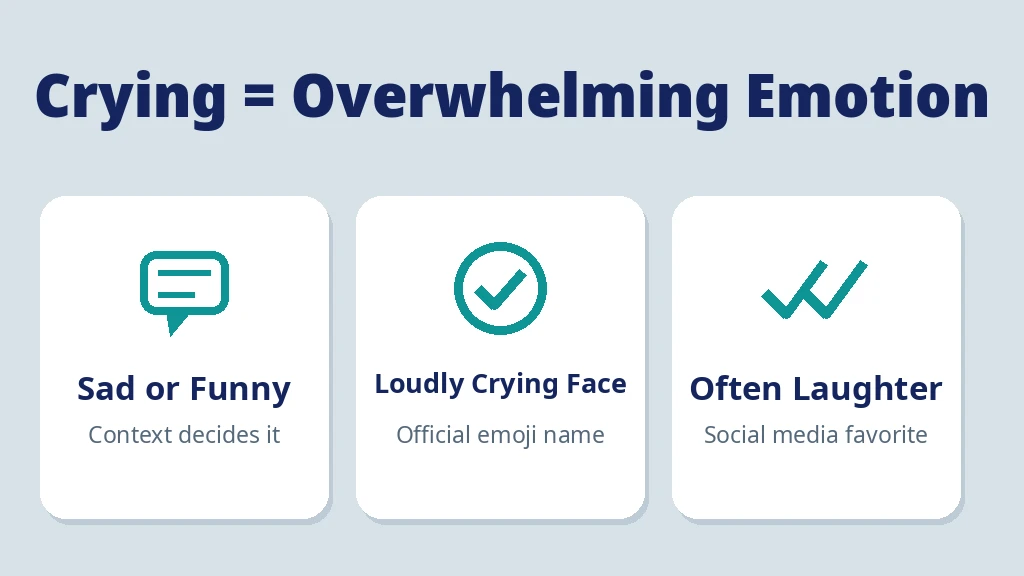
Here is the short answer: the crying emoji usually means overwhelming emotion, and context decides which one. Its official name is Loudly Crying Face, and it can show real sadness, laughing so hard you cry, being deeply moved, or embarrassment. On social media, it very often means laughing, not literal sadness.
That split is what makes this emoji tricky. The same face can close a sad story or a funny one, and reading it wrong can turn a joke into a worry, or a real problem into a laugh. This guide breaks down the emoji properly: which face is which, what each version means, and how to read the message around it.
📌 What Does the Crying Emoji Mean in Text?
The main crying emoji is the Loudly Crying Face, Unicode character U+1F62D, added in Unicode 6.0 in 2010.
It shows a yellow face with closed eyes and streams of tears pouring down both cheeks, plus an open, wailing mouth. The design is deliberately over the top. It does not show a quiet tear. It shows feelings so strong they cannot be held back, which is exactly why it covers both extremes: grief and hilarity.
✅ Quick definition: The crying emoji (Loudly Crying Face) means overwhelming emotion that context decides: real sadness or grief, laughing so hard you cry, being moved to tears, or embarrassment. On social media it frequently signals laughter or exaggeration rather than literal crying, so always read the words around it.
Two close relatives cause most of the confusion. The Crying Face shows a single tear on each cheek and a sadder, quieter mood, closer to genuine upset. The Face with Tears of Joy, the laughing face with tears, is almost always laughter. If you mix these three up, you will misread the tone, so the comparison later in this guide matters.
The emoji looks slightly different on every phone and platform. Apple, Google, and Samsung all draw the tears and mouth their own way, but the meaning stays the same.
💡 Crying Emoji Meaning in Easy Words
Think of the crying emoji like a volume knob turned all the way up.
👉 A single tear means “I am a bit sad”
👉 Streams of tears mean “I cannot handle this feeling”
👉 The feeling itself can be sad or funny
So in the simplest words:
Crying emoji = “This hit me really hard.”
What hit them? That is the part the emoji cannot say alone. A message about a loss means grief. A message about a failed cooking attempt means laughter. A message about a wedding speech means being moved. The emoji supplies the intensity. The words supply the direction.
Online, people also use it as exaggeration. “This show made me cry” often means “this show moved me a lot,” not literal sobbing, and hyperbole is part of internet language.
🌍 Where Is the Crying Emoji Used?
The crying emoji lives everywhere people react emotionally online.
📱 Common places:
- Instagram comments and captions
- TikTok videos and replies
- X (Twitter) posts about shows, sports, and news
- WhatsApp and Messenger chats with friends and family
- Snapchat stories and reactions
- YouTube comments under emotional or funny videos
- Fan communities reacting to music, shows, and games
🗣️ Example situations:
- A friend shares a genuinely sad piece of news
- A meme is so funny someone claims they cried laughing
- A graduation or wedding moment moves everyone
- A favorite character dies in a show
- An embarrassing story gets retold in the group chat
🤔 Why Do People Use the Crying Emoji?
🔥 It shows intensity fast
Plain text struggles with strong feelings. Adding the crying emoji instantly says “this was not a small reaction,” without a paragraph of explanation.
😂 It is the laughter shortcut
Many people now use it where they once used the laughing face. Saying something is “so funny I cried” feels stronger than a simple laugh, and the emoji carries that exaggeration.
💬 It softens sad news
When sharing something upsetting, the emoji signals vulnerability. It invites sympathy instead of a cold, flat announcement.
😑 It works as playful drama
Missing a concert ticket or failing a recipe is not a tragedy, but the emoji lets people play it up for comedy. Friends understand the drama is part of the joke.
💬 Real-Life Examples of the Crying Emoji
Examples:
Example 1:
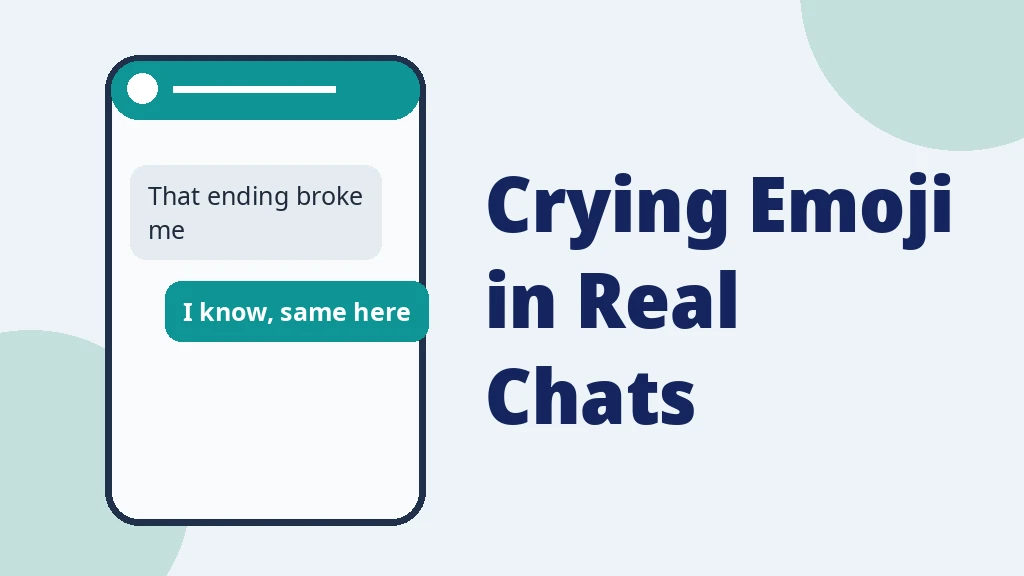
- Friend: “I just finished the last episode and I am not okay 😭”
- You: “I know, that ending broke me too”
👉 Meaning: Being deeply moved by a show. Sad, but in a fan community way, not a real life crisis.
Example 2:
- Friend: “He tried to fix the sink and flooded the kitchen 😭😭”
- You: “I am crying, why is he like this”
👉 Meaning: Laughing so hard you cry. The story is funny, and the emoji marks the laughter.
Example 3:
- Sister: “Grandma saw my graduation photos and started crying 😭”
- You: “That is so sweet, give her a hug from me”
👉 Meaning: Genuine emotion and being moved, a warm family moment.
Example 4:
- Friend: “I waved back at someone who was waving at the person behind me 😭”
- You: “Nooo, the secondhand embarrassment”
👉 Meaning: Embarrassment played for comedy. The tears exaggerate the awkwardness.
⚖️ Crying Emoji vs Similar Emoji
| Emoji | Official name | Usual feeling |
|---|---|---|
| 😭 | Loudly Crying Face | Overwhelming emotion, sad or funny |
| 😢 | Crying Face | Quieter sadness, disappointment |
| 😂 | Face with Tears of Joy | Laughter, almost always funny |
| 🥹 | Face Holding Back Tears | Being moved, gratitude, holding it in |
| 😿 | Crying Cat | Playful sadness, cute version |
🧠 Key difference:
- The loudly crying face is the loudest one. Streams of tears mean the feeling is huge, in either direction.
- The single tear crying face is quieter and sadder. Use it when someone is genuinely down, not when a joke landed.
- The tears of joy face is laughter first. If the message is funny, that face removes the doubt that the loudly crying face leaves open.
Emoji mix ups cause the same trouble as abbreviation mix ups. Here is what SMH means in text, another reaction that is easy to misread when the tone is unclear.
🔁 Crying Emoji Variations You Should Know
😭😭 doubled or tripled turns the volume even higher. Two or three loudly crying faces usually mean “I am dying laughing” or “this destroyed me emotionally,” depending on the message. Repetition is emphasis, not extra sadness.
😭 combined with 😂 is a common pairing that leans funny. Together they say “this is so funny it hurts,” and the laughing face helps settle the reading toward laughter.
😭 in fan communities means devotion and emotion, not distress. “Crying over this album” is praise, not a complaint.
↩️ How to Reply to the Crying Emoji
Your reply depends on whether the tears are sad, funny, or moved.
If the news is genuinely sad: offer support first. “I am so sorry, are you okay?” or “I am here if you need anything” is right. Do not joke until you are sure the person is joking.
If the message is clearly funny: match the energy. “I am crying too” or “Stop, this is too funny” keeps the joke going and shows you read the tone correctly.
If you cannot tell: ask gently. “Wait, are you laughing or actually upset?” takes two seconds and prevents a badly timed joke about a real problem.
And if the emoji arrives after your own awkward story, a light BRB style deflection, like “BRB, hiding from embarrassment,” keeps it playful without ignoring the moment.
⏰ When to Use the Crying Emoji (and When to Avoid It)
✅ Good situations:
- Reacting to something hilarious with friends
- Sharing a moving moment, like a graduation or reunion
- Fan reactions to shows, music, and games
- Playful exaggeration about small daily fails
- Showing sympathy when a friend shares sad news
⚠️ Avoid using the crying emoji when:
- Someone shares a serious loss or crisis, where words matter more than an emoji
- The message is formal, for work, or for someone you do not know well
- The tone could be misread and a joke would hurt
- You are announcing bad news yourself and need to be clear, not dramatic
⚠️ Common Misunderstandings About the Crying Emoji
Let’s clear up the confusion around the crying emoji:
❌ It does not always mean sadness. On social media, laughter is one of its most common uses. The tears show intensity, not only grief.
❌ It is not the same as the single tear face. The loudly crying face is louder and more dramatic. The single tear face is quieter and usually genuinely sad.
❌ It is not the same as the laughing tears face. Face with Tears of Joy is almost always laughter. The loudly crying face keeps both readings open until context settles it.
❌ More tears do not mean more tragedy. Doubled or tripled crying faces usually mean stronger laughter or stronger fan emotion, not a worse disaster.
💡 Pro Tips for the Crying Emoji
✅ Read the words first. The emoji sets the volume, but the sentence sets the feeling. Check the message before you decide whether the tears are sad or funny.
✅ Match the tone. If a friend is laughing, laugh along. If the news is serious, answer with care first and save the jokes for later.
✅ When unsure, ask. “Are you laughing or upset?” is a kind question, and it beats a confident reply that lands wrong.
Related Texting Slang
Keep exploring the dictionary: the meaning of DLS, the meaning of DRY, FR in chats and texts, FYP in chats and texts, HBU in chats and texts, HY, JK in chats and texts.
Frequently Asked Questions
What does the crying emoji mean in text?
The crying emoji (Loudly Crying Face) means overwhelming emotion that context decides: real sadness, laughing so hard you cry, being moved, or embarrassment. On social media it often means laughter rather than literal sadness.
What is the official name of the crying emoji?
Its official name is Loudly Crying Face. It is Unicode character U+1F62D, added in Unicode 6.0 in 2010, and it shows a face with streams of tears and an open, wailing mouth.
Does 😭 mean sad or funny?
It can mean either. A sad message makes it sadness. A funny story makes it laughter. If you are unsure, read the words around it, and remember that on social media the funny reading is very common.
What is the difference between 😭 and 😢?
The loudly crying face (😭) shows streams of tears and overwhelming emotion, sad or funny. The crying face (😢) shows a single tear and a quieter, usually genuinely sad mood.
What is the difference between 😭 and 😂?
Face with Tears of Joy (😂) is almost always laughter. Loudly Crying Face (😭) is broader: it can be laughter, sadness, or being moved, and only context tells you which one.
🧾 Final Thoughts
The crying emoji is popular because it refuses to pick one feeling. It says “this hit me hard” and lets the message decide whether hard means sad, funny, moved, or embarrassed.
The safest habit is simple: read the words first, the emoji second. If the words are sad, answer with care. If they are funny, laugh along. If you still cannot tell, ask.
The emoji references agree on the range. Emojipedia describes Loudly Crying Face as conveying uncontrollable feelings from grief and frustration to hilarity, and Dictionary.com notes that it commonly shows intense sadness, but also laughter and being moved, depending on context.