You send a long, excited message about your day. The reply comes back in two letters: “ok”. No question, no reaction, no energy. That is what dry means in text. A dry reply is a short, low effort message that does not move the conversation forward, and it can feel surprisingly cold.
Dry texting is not about one short message. Everyone sends a quick “ok” when they are busy. Dry texting is a pattern: reply after reply with one word answers, no questions, and no interest. In this guide, you will learn what dry means in texting, how to spot it, why people do it, and how to reply without starting a fight. You will also learn the other meanings of dry, including the coding term DRY, so you never mix them up.
What Does Dry Mean in Text?
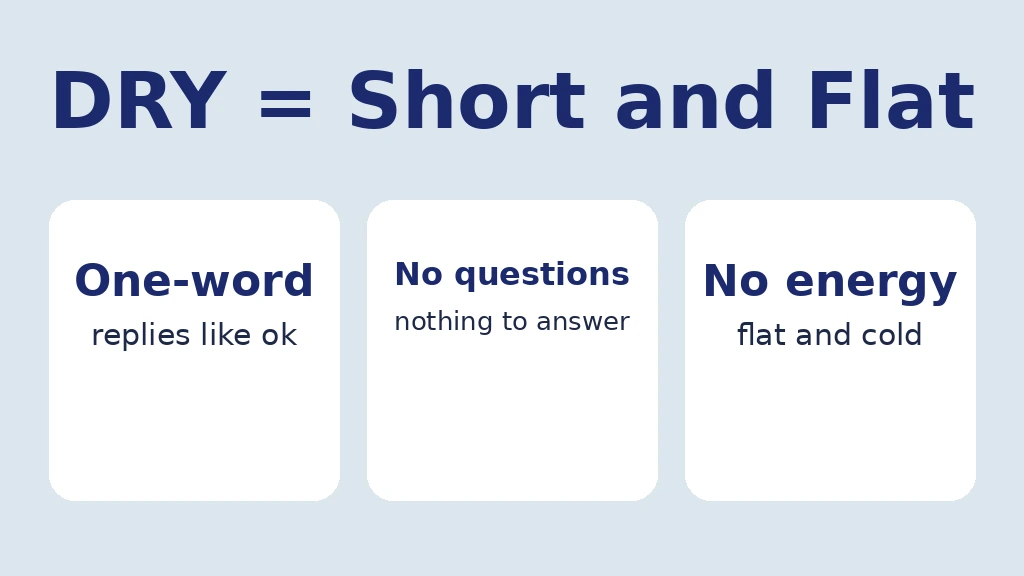
In texting, dry means boring, flat, or lacking energy. A dry texter replies with the bare minimum: “ok”, “yeah”, “cool”, “nice”, “sure”, or a single emoji with no words. These replies answer the message in a technical sense, but they give the other person nothing to reply to.
Think of a conversation as a game of catch. A good reply catches the ball and throws it back with something new: a question, a reaction, or a detail. A dry reply drops the ball. The other person has to pick it up, start again, and hope for a better throw next time. After a few dropped balls, most people stop throwing.
Dry texting is different from slow texting. Slow texting is about timing: replies that arrive hours later. Dry texting is about quality: replies that arrive on time but say almost nothing. A person can reply instantly and still be dry, and a person can reply late and still be warm.
Dry Meaning in Easy Words
In easy words, a dry text is a reply that sounds uninterested, even if the sender did not mean it that way. The words are short, the tone is flat, and the conversation has nowhere to go.
Here is the simplest test. Read the reply and ask: can I answer this without starting a whole new topic? If the answer is no, the reply is probably dry. “Ok” leaves you stuck. “Ok, that sounds fun, what time did it happen?” keeps the chat alive.
Dry does not always mean angry. Sometimes it means busy, tired, or unsure what to say. That is why this guide does not tell you to assume the worst. It shows you how to spot the pattern, check the context, and respond in a way that gives the conversation a fair chance.
Where Is Dry Texting Used?
Dry texting shows up on every platform where people chat in short bursts. On WhatsApp and iMessage, it looks like a string of one word replies to long messages. On Instagram DMs, it looks like a single emoji in response to a photo or a story. On Snapchat, it looks like a bare “yeah” after a long snap story.
Why Do People Send Dry Texts?
People send dry texts for many reasons, and most of them are not about you. The most common reason is simply being busy. A person in a meeting, on a commute, or looking after kids may type “ok” just to acknowledge the message and move on.
Tiredness is another major reason. After a long day, even a friendly person may not have the energy for a full conversation. Their short replies are a sign of low battery, not low interest. Stress works the same way. When someone is worried about work, money, or family, chatting can feel like one more task.
Sometimes, though, dry texting does signal a problem. It can mean low interest, a wish to end the conversation, or a quiet way of showing upset without saying so directly. The pattern matters more than any single message. One dry day is normal. Two dry weeks, with no change, is a pattern worth noticing.
Dry Texting vs Similar Patterns
Dry texting is often confused with other chat patterns, but each one means something different.
Slow replies are about time, not effort. A slow replier may take hours but then send a thoughtful message. A dry replier may answer in seconds with one word. Ghosting is different again: ghosting means no reply at all, and it usually ends the conversation. A dry texter still replies, just barely.
Short replies are not always dry. “Yes, 7pm works, see you there” is short, but it is complete and useful. It answers the question and confirms a plan. A dry reply, by contrast, is short and empty. It adds no information, no feeling, and no next step.
For other short chat styles, see our guide to SMH, a reaction that is short but full of feeling, and our guide to BRB, a short reply that promises a return rather than ending the chat.
Real Chat Examples of Dry Texting
Here are realistic examples of dry texting. Each one is followed by a short note on why it feels dry.
Example 1: You: “I finally finished the project I have been working on for weeks, I am so relieved.” Them: “nice.” Meaning: No question, no congratulations, no energy. The conversation stops here.
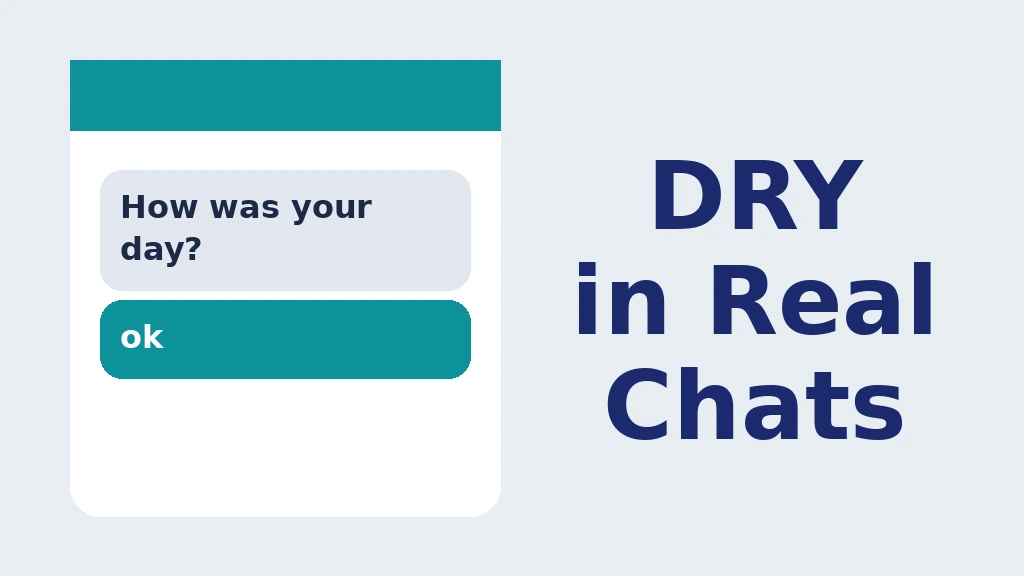
Example 2: You: “How was your day? Did the interview go well?” Them: “ok.” Meaning: Two questions answered with one flat word. You learn nothing, and you have nothing to ask next.
Example 3: You send a funny photo from a trip. Them: a single laughing emoji, nothing else. Meaning: A reaction, but no comment, no question, and no shared joke.
Example 4: You: “Do you want to meet on Saturday or Sunday?” Them: “sure.” Meaning: Agreement without a choice. You still have to ask again to make a plan.
Signs You Are Dealing With a Dry Texter
The clearest sign is one word answers, again and again. “Ok”, “yeah”, “cool”, “fine”, and “lol” alone are the classic dry replies. A single one is normal. A whole conversation made of them is dry.
The second sign is no questions. A dry texter almost never asks you anything back. You do all the asking, all the sharing, and all the work of keeping the chat alive. Over time, that one sided effort is exhausting.
The third sign is ignored details. You share a photo, a link, or a story, and the reply does not mention any of it. The texter may not have read it closely, or may not have wanted to engage with it. Either way, the message is clear: the conversation is not a priority right now.
When to Use Short Replies and When to Avoid Dry Texting
Avoid dry texting with people you care about, especially in dating and close friendships. A pattern of flat replies can damage a relationship slowly, because the other person starts to feel unimportant. If you notice yourself going dry, say so: “Sorry for the short replies, it has been a long day” can prevent a misunderstanding.
Avoid dry texting as a way to end a relationship without saying so. If you have lost interest, an honest, kind message is fairer than weeks of “ok” and “sure”. Dry texting as a slow fade hurts more, because it leaves the other person guessing.
Common Misunderstandings About Dry Texting
One misunderstanding is that dry always means “I do not like you”. It does not. Busy, tired, stressed, and shy people all send dry texts for reasons that have nothing to do with the other person.
Another misunderstanding is that dry texting is always rude on purpose. Sometimes it is, but often it is just a habit. Some people text in short bursts with everyone, including their best friends. Judging the habit without knowing the person leads to unfair conclusions.
A third misunderstanding is that a dry reply is the same as a rude reply. A rude reply attacks or insults. A dry reply simply gives too little. The effect can still hurt, but the intent is usually different, and the fix is different too.
A fourth misunderstanding is confusing dry with the coding term DRY. In programming, DRY means “do not repeat yourself”, a principle that tells coders not to write the same code twice. That meaning only applies in a coding conversation. In a normal chat, dry means flat and uninteresting, not a coding rule.
Dry Can Also Mean No Alcohol
Outside chat style, dry has an older everyday meaning that shows up in plans and invitations: no alcohol. A dry party or a dry wedding is an event where no alcohol is served. A dry campus or a dry town restricts or bans alcohol sales.
The same sense applies to people. Someone who is “staying dry” is abstaining from alcohol, and “drying out” means going through a period without drinking. This meaning describes events and people, never the quality of a reply, so a message like “the party is dry” is about the drinks, not about anyone’s texting.
How to Reply to Dry Texts
If you get a dry reply, do not panic and do not send a long, angry message. Start by giving the person a fair chance. Reply with something open and easy, such as “How did it go, tell me more?” If the next reply is still dry, you have useful information.
Ask a direct, easy question. Closed questions like “Did you like it?” invite one word answers. Open questions like “What was the best part?” invite a real reply. If even open questions get one word back, the pattern is confirmed.
Be honest, but gentle, if the pattern continues. Try “I have noticed our chats feel a bit flat lately. Is everything okay, or are you just busy?” That message names the pattern without accusing the person, and it gives them a chance to explain.
If nothing changes after an honest talk, it is okay to pull back. You do not have to keep carrying a one sided conversation. Match their energy, spend your time on chats that feel mutual, and let the dry chat fade naturally. If the relationship matters, a face to face talk or a phone call often works better than more texting.
Pro Tips: How to Not Be Dry Over Text
Add one detail to every reply. Instead of “ok”, try “Ok, that sounds good, I am free after 6”. One detail turns a dead end into a conversation.
Ask one question back. It does not have to be deep. “How was yours?” or “What did you think of it?” is enough to show interest and keep the chat moving.
React before you reply. A short reaction, such as “That is great news” or “Oh no, are you okay?”, shows feeling before facts. Feeling is what makes a reply feel warm rather than dry.
Use voice notes or calls when typing feels like a chore. Some people are dry in text but warm in voice. If typing drains you, a 30 second voice note can carry more warmth than ten one word texts.
Related Texting Slang
Keep exploring the dictionary: cap in chats and texts, DTM, explained with real examples, DTS, explained with real examples, FR in chats and texts, FYP in chats and texts, HBU in chats and texts, JK in chats and texts.
Final Thoughts
Dry in text does not mean a person is bad, and it does not always mean they have lost interest. It means their replies are short, flat, and low effort, and they do not give the conversation anywhere to go. One dry reply is normal life. A pattern of dry replies is a signal, and the kind response is to check the context, ask an honest question, and then decide how much energy to keep investing.
If you are the dry texter, the fix is simple and small: add one detail, ask one question, and say when you are busy. Those three habits turn a flat chat into a warm one, without turning texting into a chore. For the dictionary sense behind this usage, Cambridge defines dry as not interesting or exciting, and Dictionary.com lists dull and uninteresting among its dry senses, which is exactly the feeling a dry text leaves behind.
Frequently Asked Questions
What does dry mean in texting?
Dry in texting means short, low effort replies that do not move a conversation forward, such as “ok”, “yeah”, or “cool” with no question or detail.
Is dry texting rude?
It can feel rude, but it is not always meant that way. Busy, tired, or stressed people often send dry texts without intending to hurt anyone. A pattern of dry texts, rather than one message, is the real sign to notice.
Does dry texting mean someone is not interested?
Not always. It can mean low interest, but it can also mean busyness, tiredness, stress, or simply a short texting style. Check the pattern and ask gently before you conclude.
What is a dry texter?
A dry texter is someone who regularly replies with one word answers, asks no questions, and does not add energy or detail to a conversation.
How do I reply to a dry texter?
Ask an open question, such as “What was the best part?” If the pattern continues, name it gently and ask if everything is okay. If nothing changes, it is fair to pull back your own effort.
How can I stop being dry over text?
Add one detail to each reply, ask one question back, and tell people when you are busy. Voice notes and calls also help if typing feels like a chore.
What does DRY mean in coding?
In coding, DRY means “do not repeat yourself”, a principle that tells programmers not to write the same code twice. That meaning applies only in programming contexts, not in normal chats.