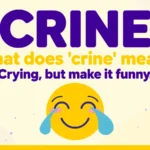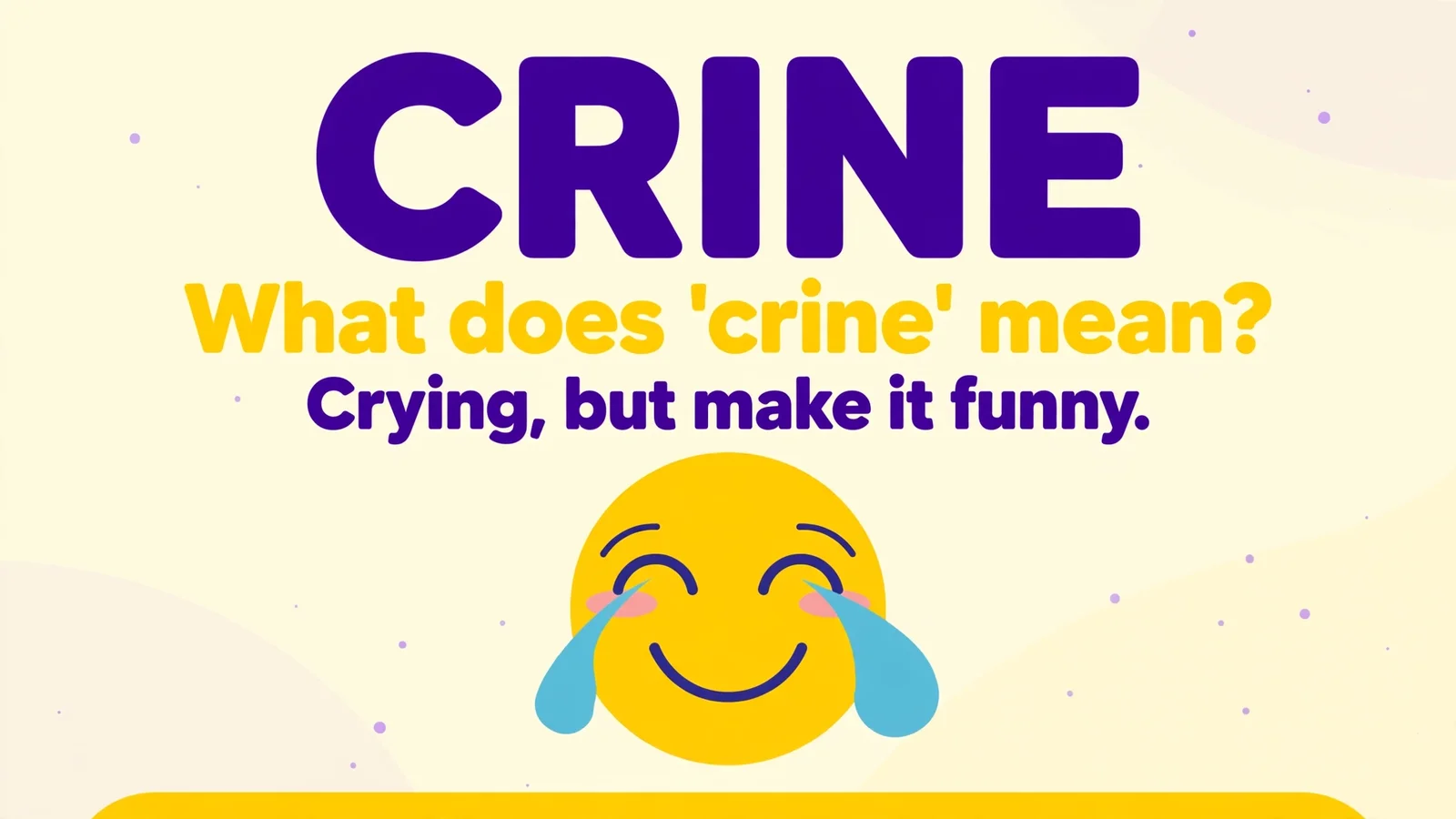
Crine (pronounced like “cry” plus an “n” sound) is a verb. It is an intentional, playful misspelling of “crying,” used to mean laughing so hard you are crying. When someone texts “I’m crine,” they are not actually sad. They are telling you something was so funny that it brought them to tears.
Crine: Meaning & Origin
At its core, crine is a pronunciation spelling of “crying.” It captures how the word can sound in casual speech, the same way “finna” captures “fixing to.” That spelling style has deep roots in African American English. Writers there have long spelled words like finna and “tryna” the way people actually say them. Online, crine picked up the same energy. As a result, it feels informal, funny, and instantly readable to anyone who has grown up texting.
The term then went mainstream through social media. People started typing “I’m crine” as a reaction to memes, funny videos, and shocking plot twists. They usually pair it with crying emojis for extra effect. By 2026, the word had spread far beyond its original circles. In fact, Merriam-Webster now tracks “crine” as a recognized slang term. The dictionary says it describes crying with laughter at something. It also covers happy overwhelm, like gratitude or amazement so strong it brings you to tears.
That second use is also worth knowing. Most of the time, “crine” means laughing uncontrollably. But it can also describe happy-crying. That is the crying you do when something is genuinely touching, like a surprise gift or a friend’s big achievement. Still, context usually makes it clear which one is meant.
Crine belongs to a bigger internet trend of deliberately respelling common words to change their vibe. Swapping “crying” for “crine”, for instance, makes the feeling lighter and funnier. It signals that you are in on the joke, not actually upset. If you see the word and worry that someone is sad, look at the emojis and the conversation around it. Nine times out of ten, everyone is laughing.
Part of what makes crine stick, though, is how perfectly it fits the rhythm of online speech. English speakers naturally soften “crying” in fast conversation. Writing it as “crine” captures that sound the way your ear hears it. It is the same instinct behind “gonna,” “wanna,” and “tryna”: spelling that follows speech instead of the dictionary. In 2026, the word is everywhere from celebrity tweets to TikTok comments. That is why it landed on lists of the year’s most-searched teen slang terms. When a misspelling gets its own dictionary tracking, you know it has officially arrived.
Crine Examples in Real Conversations
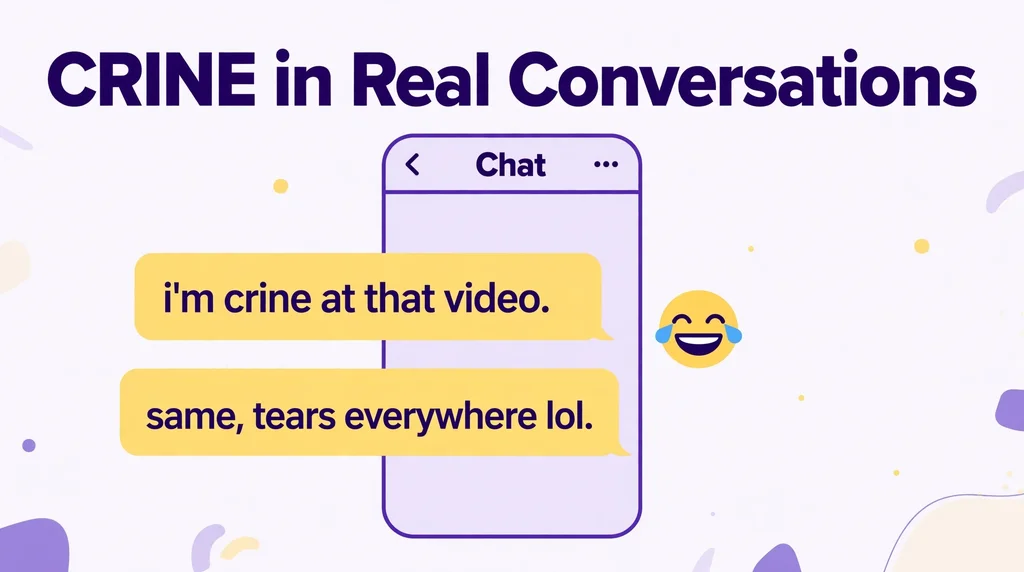
Still, seeing the word in action is the fastest way to learn it. Here are realistic examples from different corners of the internet.
Texting Between Friends
- Maya: did you see the video of jake trying to parallel park
- Ryan: YES the way he just gave up and walked away
- Maya: I’m CRINE he sat on the curb like it was a bus stop 😭
- Ryan: bro the honking in the background sent me
TikTok Comment Section
Under a video of a cat stealing a whole rotisserie chicken off a counter:
- @user1: the eye contact he made with the camera. IM CRINE
- @user2: zero remorse. zero shame. absolute legend 😭😭
- @user3: he knew exactly what he was doing. crine at the commitment
Gaming Chat
- Player 1: i just fell off the map AGAIN
- Player 2: LMAOOO stop sprinting off cliffs challenge
- Player 1: my character has no survival instincts I’m crine
- Player 3: clip it, that’s going in the group montage
Twitter / X Post
A wholesome post about a teacher surprising students with free books:
- OP: my teacher just walked in with a box of books and said “everyone gets one, no catch” 🥹
- Reply: this is the good stuff. actually crine
- Reply: teachers like this deserve the world
Notice how the last example shows the second meaning. Nobody is laughing there. The commenter is moved, almost to tears, by something kind. That is crine doing double duty: mostly laughter, sometimes genuine happy tears.
How to Use Crine (And How to Reply)
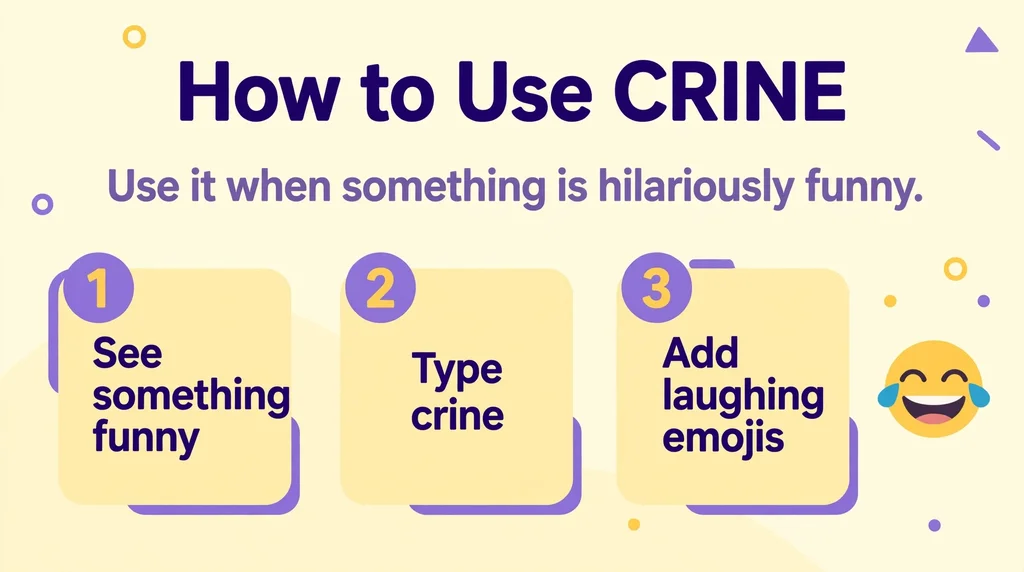
Using crine correctly is simple, but a little timing goes a long way.
When to use it
- Reacting to something funny. This is the number one use. A meme, a fail video, a friend’s story: “I’m crine” works as a standalone reaction. It also works at the start of a sentence.
- Describing the funniest part. You can point at exactly what got you. Try “crine at the way he blamed the dog.” Or go with “the ending had me crine.”
- Expressing happy overwhelm. Good news, sweet surprises, proud moments: “crine, you did amazing” tells someone their moment genuinely moved you.
- Keep it casual. Crine lives in texts, DMs, comments, and captions. It does not belong in school essays, work emails, or formal writing.
Grammar tips
- Most people write “I’m crine” (present tense) or “that had me crine.” Both are correct in slang.
- Capitalization is optional. “IM CRINE” in all caps adds drama. Lowercase “I’m crine” feels chill.
- It pairs naturally with crying emojis (😭), which underline the joke.
Variations you will see online
- “I’m crine” is the classic form, used as a reaction: “I’m crine, he really said that.”
- “Had me crine” credits the joke: “That plot twist had me crine.”
- “Crine at” points at the trigger: “Crine at the accuracy of this meme.”
- Standalone “crine” works like a one-word laugh track in comments and DMs.
All of these mean the same thing. So pick whichever one fits the sentence you are writing, and do not overthink the grammar. Nobody is grading your texts.
How to reply when someone says it
You do not need a clever comeback. Instead, acknowledge the laugh and keep the energy going. Simple replies that work:
- “RIGHT??” or “I knowww, I’m still laughing”
- Send the crying-laughing emoji back (😭 or 😂)
- Add fuel: “wait until you see the second one” with another meme
- If they used it the emotional way (“crine, you did amazing”), keep it simple. A plain “thank you, that means a lot” fits perfectly
One thing to avoid: do not “correct” someone’s spelling. The misspelling is the whole point. Telling a friend that crine is not a real word will just make you the cringe one in the chat. If you want to sound natural with similar laughing slang, check out LBVS. It is another texting favorite for when something is genuinely funny.
For Parents: Is Crine Safe?
Yes, crine is completely harmless. It is just a silly way of saying “I’m laughing so hard I’m crying.” It carries no hidden, rude, or dangerous meaning. If your child types it, they are almost certainly reacting to something funny online, not asking for help.
Frequently Asked Questions
What does crine mean in slang?
In slang, crine means laughing so hard you are crying. It is an intentional misspelling of “crying” used as a reaction to something hilarious, and sometimes to describe being overwhelmed with happy emotion to the point of tears.
How do you pronounce crine?
Crine is pronounced like the word “cry” with an “n” sound added at the end, so it sounds like “cry-n.” It rhymes with words like “fine” and “mine.”
Is crine the same as cringe?
No. Crine and cringe are different words with different meanings. Crine means laughing until you cry. Cringe describes secondhand embarrassment or awkwardness. They look similar, but they express opposite feelings.
Where did crine come from?
Crine comes from a pronunciation spelling of “crying” with roots in African American English, similar to words like “finna.” It spread through social media platforms like Twitter, TikTok, and Threads, and Merriam-Webster now tracks it as recognized slang.
Is crine only about laughter?
Mostly, yes. The dominant use is reacting to something funny. But it can also describe being moved to tears by something touching, like good news or a kind gesture. Context and emojis usually make the meaning clear.
Can I use crine in formal writing?
No. Crine is informal internet slang meant for texts, DMs, comments, and captions. Use “crying with laughter” or “laughing uncontrollably” in school papers, work emails, and any formal setting.
Is "crine" the same as crying laughing?
Basically, yes. "Crine" is the deliberate misspelling of "crying" used to say you are laughing so hard it feels like crying. Think of it as the texting version of the crying-laughing emoji, with roots in AAVE pronunciation.
How do you pronounce "crine"?
Like "cry-n," rhyming with "fine." It is written the way "crying" sounds in fast, casual speech, which is exactly the joke: it is crying, typed the way it sounds when you can barely get the word out.
Conclusion
Crine is one of those slang words that earns its popularity. It packs a whole emotional reaction, laughing so hard you cry, into five letters, and it reads exactly the way it feels. Whether you are reacting to a meme in the group chat or getting misty-eyed over good news, “I’m crine” says it better than a paragraph ever could. Now you know how to spot it, how to use it, and how to reply when it pops up in your feed. So the next time a reply just says crine, read it as laughter too big for correct spelling.
Discover more: Crine is part of the new wave of internet slang reshaping how we text in 2026, alongside playful terms like LARP, the punchy reaction SYBAU, and everyday texting staples like BET. If you spend time on TikTok, you will also want to know what FYP means, since that is where half of these words take off.
Sources: Merriam-Webster’s entry on crine
For a deeper look at how “crine” is tracked as slang, see Merriam-Webster’s entry on crine.