Have you ever stared at your phone screen after receiving a message and wondered what a specific string of letters meant? You are not alone. In the fast-paced world of digital communication, new acronyms pop up daily.
One term that often leaves people scratching their heads is LBVS. Whether you found it in a text from a crush, a comment on your latest post, or a quick update in a group chat, it can be confusing. If you are someone who values staying in the loop with modern internet culture, you have come to the right place.
This article is designed for everyone from social media enthusiasts to casual texters who just want to understand the language of the internet. We will break down exactly what this term stands for, how to use it, and when you should avoid it entirely.
Defining the LBVS Acronym
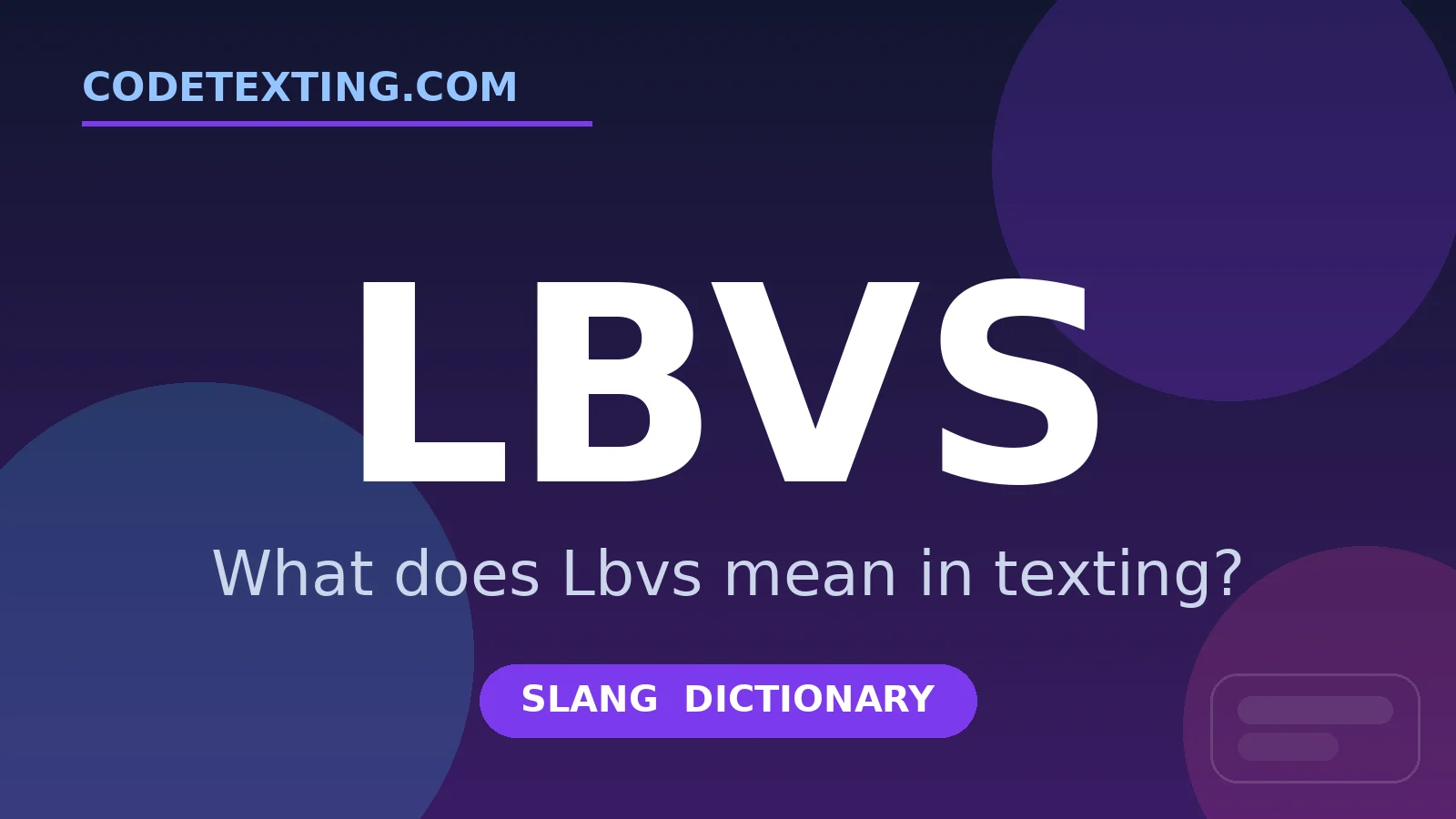
At its core, the lbvs acronym stands for laughing but very serious. It is a unique way of expressing a complicated emotional state where the sender finds a situation humorous but also feels a sense of genuine concern or truth about the matter.
It is a way to bridge the gap between comedy and reality. When someone uses this term, they are essentially saying that while the situation is objectively funny or absurd, there is a underlying layer of seriousness that they cannot ignore.
Think of it as a defense mechanism or a way to soften the blow of a heavy truth. For instance, if a friend tells you they spent their entire paycheck on a pair of shoes they did not need, they might add lbvs to the end of their message. They are laughing at their own financial misfortune, but they are also very serious about the fact that they are now broke.
It acts as a tone marker. Without it, the text might come across as purely dramatic or purely joking.
By using this term, the person provides info about their complex feelings, letting you know they are self-aware enough to see the humor in their struggle while acknowledging the reality of the situation. It is a way to keep the conversation light while still being honest about their circumstances.
Background and Evolution of the Term
The origins of internet slang are often organic and difficult to trace to a single source. Like many abbreviations, lbvs likely emerged from the need for brevity in mobile texting. In the early days of character limits and T9 keyboards, people sought ways to convey complex emotions in as few letters as possible.
The term began appearing on social media platforms and message boards as a way to handle irony. Over time, it became a staple in the lexicon of younger generations who grew up with smartphones.
As the internet evolved, so did the way we use these terms. What started as a niche abbreviation on platforms like Twitter or early text messaging services has become a recognized part of digital vernacular. Today, it is frequently used in comments sections where users want to react to a post that is both relatable and slightly depressing.
It captures the modern feeling of laughing at the absurdity of life. You can find more information about how digital language changes over time by visiting the Merriam-Webster guide on the history of slang to see how words and acronyms adapt to our daily needs.
The term has transitioned from a simple text shortcut to a nuanced way of navigating social interactions online. Its longevity is due to the fact that humans often encounter situations that are simultaneously funny and serious, making the acronym a permanent fixture in our digital toolkit.
Usage in Various Contexts
You will find this term popping up in many different scenarios, ranging from casual check-ins to venting sessions. Because it balances two opposing emotions, it is incredibly versatile. It is common to see it used when someone is discussing personal life struggles, work stress, or even pop culture moments that are just too weird to be true.
Consider these examples of how it might look in a natural conversation:
Person A: I just tried to cook dinner and set the kitchen timer for three hours instead of three minutes. Dinner is now a pile of charcoal. lbvs.
Person B: Oh no! Are you okay?
Person A: Yeah, I am fine, just hungry and embarrassed.
In this dialogue, the sender uses the term to show they recognize the stupidity of their mistake while admitting they are genuinely annoyed that they have no food. Another example might occur in a gaming environment:
Player 1: I just lost my rank because my internet cut out right at the end of the match. lbvs.
Player 2: That is brutal. I feel your pain.
The player is laughing at their
In this case, the player is laughing at their bad luck because there is nothing else they can do, but they are very serious about the frustration of losing their progress. It works because it invites the other person to laugh with them while also acknowledging the annoyance of the event.
Common Misconceptions and Clarifications
One of the biggest misconceptions about this term is that it is a medical abbreviation. In some rare and specific scientific contexts, acronyms can overlap, but in 99 percent of digital interactions, it is strictly slang.
You should not worry that someone is talking about a medical condition when they send this to you. It is purely a social tool.
Another common misunderstanding is that the term is always sarcastic. While it does involve laughing, the serious part is usually genuine. If you treat the message as a joke, you might miss the point.
If someone tells you they are struggling with a situation and ends it with this acronym, they are inviting you to laugh, but they are also looking for validation or support. Do not dismiss their feelings just because they added a laughing element. It is also important to note that tone can be hard to read in text.
Because the term can be interpreted in multiple ways, it is always best to look at the context of the entire message. If the person seems distressed, do not assume they are joking. If the person seems lighthearted, the term is likely just a way to add flavor to their story.
Similar Terms and Alternatives
Language is full of ways to express mixed emotions. If you find that this specific acronym does not fit your vibe, there are plenty of other options that convey a similar sentiment. People often use these interchangeably depending on their personal style and the platform they are using.
| Term | Meaning | Context |
|---|---|---|
| lol | Laughing out loud | Pure humor |
| smh | Shaking my head | Disappointment |
| lmfao | Laughing my off | Intense humor |
| cry laughing | Tears of joy | Overwhelming humor |
| fr | For real | Serious confirmation |
When choosing an alternative, consider the intensity of the situation. If you are feeling more frustrated than amused, something like smh might be more appropriate. If you are mostly laughing with a hint of truth, the term we are discussing is perfect.
It sits in a unique middle ground that other acronyms struggle to fill. You might also find yourself using phrases like “I am actually crying” or “This is so sad but I cannot stop laughing” to get the point across if you want to avoid acronyms altogether.
How to Respond to This Term
Knowing how to reply is just as important as knowing what the term means. Your response should depend on your relationship with the person and the context of their message. If it is a friend sharing a funny but annoying story, you can keep it casual.
For a casual response, try something like: “I feel that, it is honestly so relatable!” or “I would be laughing too if that happened to me.” This shows you are on the same page. If you want to be a bit funnier, you could say: “At least you have a good story out of it!”
If the situation feels more serious, you should pivot to being supportive. You might say: “That sounds super annoying, I am sorry you have to deal with that.”
This validates their frustration while acknowledging the humor they pointed out. If you are in a professional setting, it is best to avoid the term entirely, but if a colleague uses it, you can respond with a neutral “I understand the frustration” to keep things grounded.
Usage in Online Communities and Dating Apps
On dating apps like Tinder or Bumble, this term often appears in bios or initial icebreakers. It is a way for someone to show they are down to earth and can laugh at their own flaws.
If you see it in a bio, it usually means the person is self-deprecating and values a sense of humor. It is a good sign that they do not take themselves too seriously.
In gaming communities, it is used to vent about glitches, bad teammates, or poor RNG. When a player says “I just got kicked from the server for no reason, lbvs,” they are using the term to bond with other players over shared misfortune. It creates a sense of community.
If someone sends this to you on a dating app, start the conversation by asking about the story behind the laugh. It is an easy way to build rapport. For example, you could ask: “What happened that made you add that?
I love a good self-deprecating story.” It shows you are paying attention and interested in their personality.
Hidden or Offensive Meanings
Generally speaking, this term is not considered offensive. It is a harmless piece of internet slang. However, context is everything.
If someone uses it in response to a tragedy or a serious injury, it could be seen as insensitive or tone-deaf. Even if the intent is to show that they are laughing at the absurdity of a bad situation, the receiver might find it disrespectful.
Always gauge the mood of the conversation before using it. If the topic is heavy, stick to sincere language. There are no hidden, secret, or offensive meanings associated with the acronym that would make it a “bad word.
It is safe for most social interactions. The only time it becomes problematic is when the timing is wrong.
Avoid using it during serious work discussions or when comforting someone who is genuinely grieving. In those cases, the laughing element, even when paired with seriousness, might be misinterpreted as mockery or lack of empathy.
Suitability for Professional Communication
You might be wondering if it is ever okay to use this in an email to your boss or a client. The short answer is no.
Professional communication requires a level of clarity and formality that acronyms often undermine. Using shorthand can make you appear unprofessional or like you are not taking the task seriously.
If you are communicating with a colleague you are very close with, you might get away with it, but it is better to err on the side of caution. Instead of using slang, explain your feelings using full sentences. If you need to express that a situation is funny but also problematic, say: “It is quite ironic that this happened, and it is also causing a bit of a challenge for the project.”
This conveys the same meaning as the acronym but in a way that respects the professional environment. Keep your work chats and emails clear of internet slang to ensure there is no confusion or misinterpretation of your intentions.
Conclusion
In conclusion, understanding the nuances of digital slang helps you stay connected in our fast-moving world. The term we have explored today is a perfect example of how we use language to navigate the messy, funny, and sometimes frustrating moments of daily life. By balancing humor with sincerity, it allows us to share our experiences in a way that feels authentic and relatable.
Whether you are texting a friend about a kitchen disaster or commenting on a social media post, now you know exactly how to use this acronym effectively. Remember that while slang is a great way to add personality to your messages, it is always important to read the room.
Use it when the vibe is casual, avoid it in professional settings, and always prioritize being kind and clear in your communication. Now that you are equipped with this knowledge, you can text with confidence and handle any confusing acronyms that come your way.
Discover More:-
- YFM Meaning Slang | What Does YFM Really Mean in Text …
- Gas Slang Meaning | What Does “Gas” Mean in Text, TikTok …
- What Does “Fit” Mean in Text, TikTok & Social Media? in 2026
- KMS Meaning Slang | What It Really Means in Text, Why …
Frequently Asked Questions
Is this term common?
Yes, it is widely used in informal texting and social media. 2.Does it always mean the person is laughing? It indicates that the person finds the situation ironic or humorous, even if they are not literally laughing out loud. 3. Can I use it in an essay?Definitely not. It is strictly for informal digital communication. 4. Does it have different meanings in other countries?While it is mostly an English-language internet term, the concept of laughing at misfortune is universal, though the acronym itself might not be used everywhere. 5. What if I do not understand the joke? It is perfectly fine to ask.A simple “I do not get it, what happened?” is a normal way to keep the conversation moving. 6. Is it considered rude to use? Rarely, unless you use it in response to someone who is genuinely upset about a serious matter. 7.How do I know if they are joking? Look at the rest of the text. If they are using emojis or exclamation points, it is likely lighthearted.
What does LBVS mean in texting?
At its core, the lbvs acronym stands for laughing but very serious. That covers the definition. Scroll down for conversation examples so you can hear how it sounds in real chats.
How do you use LBVS in a sentence?
Read two or three examples above out loud. You will feel where LBVS fits. That instinct beats memorizing a definition.
Is LBVS still popular in 2026?
Yes. People still drop LBVS in texts and comments this year. Slang shifts fast, so the usage notes above show its current vibe.
Where do people use LBVS the most?
TikTok comments, Snapchat, and group chats. That is where LBVS lives. You will rarely see it in emails or formal writing, and that is by design.
How should you reply when someone says LBVS?
Match their energy. If a friend drops LBVS jokingly, laugh it off or fire back with your own slang. If a stranger says it coldly, do not engage.