“Ate” (pronounced “ay-tay,” exactly like the word “eight”) is a past-tense verb used in slang as high praise. In other words, when someone “ate,” they did something perfectly. The image behind it is a plate of food eaten so completely that nothing is left. That is why the full version of the phrase is “ate and left no crumbs.” If a friend texts you “you ate,” they are saying your outfit, performance, or comeback was flawless. In other words, there is nothing left for anyone to criticize.
Ate: Meaning & Origin
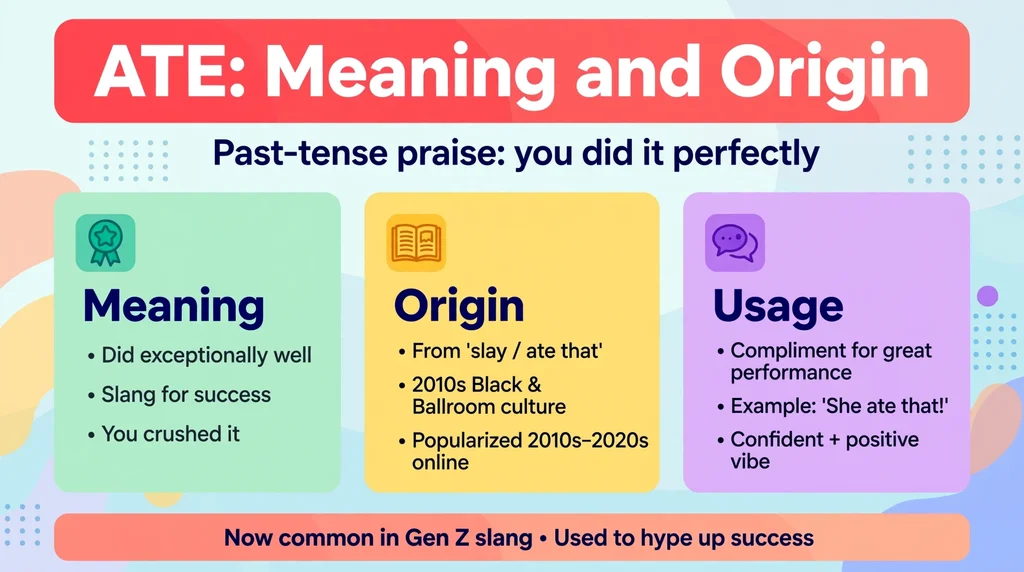
In current texting and TikTok usage, “ate” is a compliment you give after someone delivers something exceptional. In fact, it works for almost anything visible or shareable. For example, it fits an outfit, a dance routine, or a makeup look. It also fits a clapback, a presentation, or even a whole video. The point is that the person did not just do well. Instead, they devoured the moment with total confidence and left no room for doubt.
You will see it in a few common forms. “She ate” or “he ate” is the basic version. “You ate that” points at something specific, like a performance or a look. “Ate and left no crumbs” is the strongest version, meaning there was genuinely nothing left to pick apart. You might also see “ate that up” or “ate down,” which carry the same praise with a little extra flavor. One thing to know: the slang version is almost always past tense. Nobody says “he is eating that outfit” as a compliment, because in slang that just sounds like lunch.
The eating metaphor comes from Black and LGBTQ+ ballroom and drag culture. There, “eating” meant commanding a runway or performance with so much presence that you consumed the room. Social media researchers trace the phrase “you ate that” back to Black online spaces in the 2000s and 2010s. There, it grew from competitive dominance into pure admiration for excellence. Then TikTok and X carried it mainstream in the early 2020s. Now it shows up everywhere from red carpet commentary to group chats, as Later’s social media glossary documents.
Why does it feel so satisfying? Because it frames praise as completeness. On the other hand, a regular compliment says something was good. “Ate” says it was so good that every last crumb of potential got used up. As a result, there is simply nothing left for a hater to work with.
The word also travels well because it fits anywhere enthusiasm lives. Sports commentators borrow it for highlight plays. Similarly, beauty creators use it for finished looks. Students also drop it in group chats after a friend crushes a presentation. On TikTok it appears as a standalone comment or as a caption in duets. It also shows up in reaction videos announcing that somebody just delivered. Older cousins of the term, like “slayed” or “killed it,” do similar work. Still, “ate” won out with Gen Z. The food metaphor is funnier and stranger. It is also easy to remix into jokes about crumbs, plates, and full-course meals.
“Ate” in Real Conversations
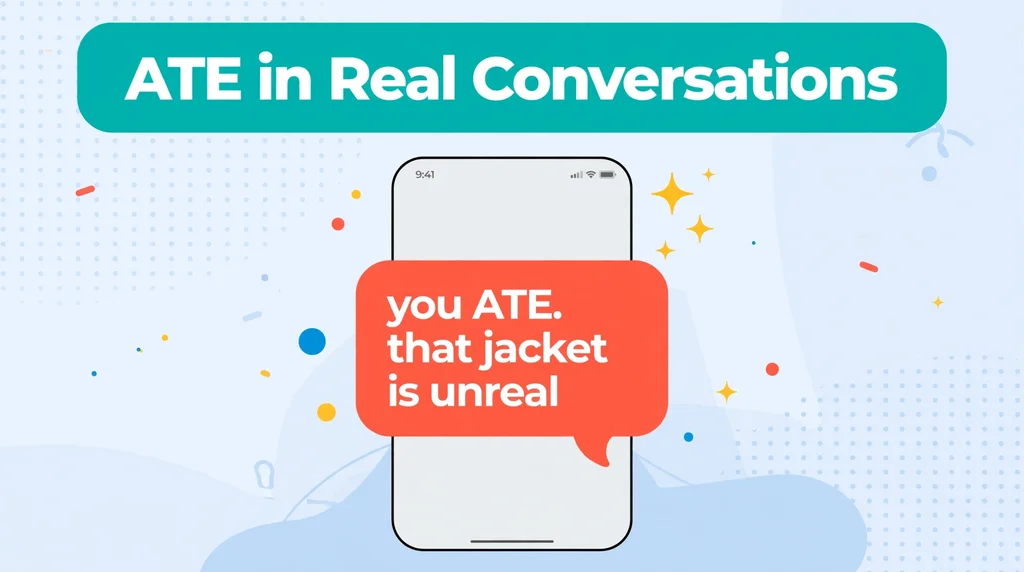
Here is how it actually sounds out in the wild, in four different settings.
1. Texting between friends (outfit photo)
- Maya: pic of me from last night, be honest
- Jae: honest? you ATE. that jacket is unreal
- Maya: stopppp thank you
- Jae: and left NO crumbs
2. TikTok comment section (dance video)
- Creator: tried the new trend, not perfect lol
- Top comment: “not perfect”?? she ate and left no crumbs, what are we talking about
- Another fan: the transitions ALONE. ate.
3. Gaming chat (after a clutch round)
- Player1: that 1v3 was insane
- Player2: bro ATE that whole lobby, diff aim
- Player3: fr, clip it
4. Instagram caption (posting your own work)
- Caption: final project done. pretty sure I ate this one.
- Friend in comments: you did NOT just say “pretty sure.” you devoured.
How to Use Ate
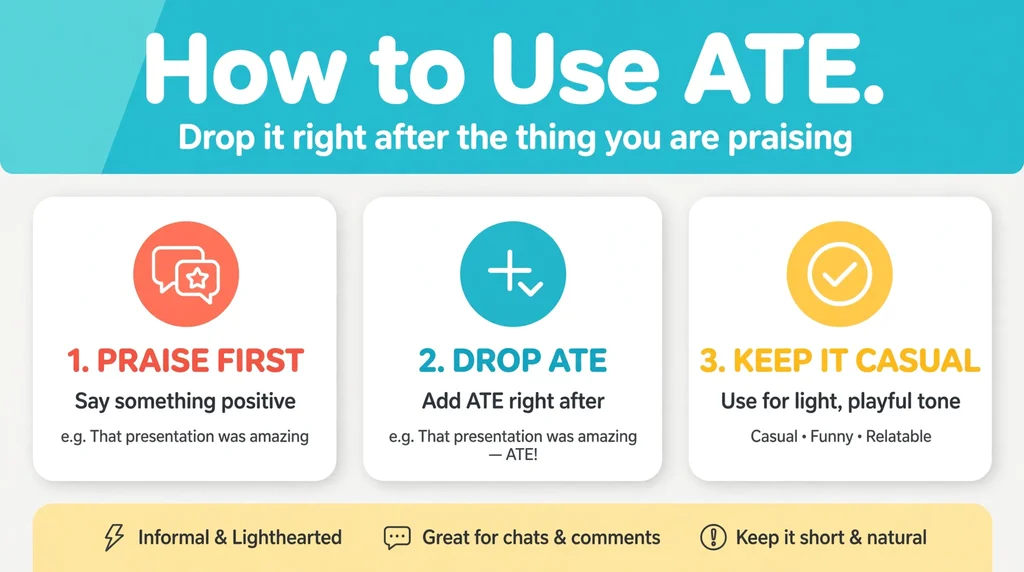
Using “ate” is simple, because the word does most of the work. Drop it right after the thing you are praising, or let it stand alone as the whole reaction.
Ways to say it
- You ate. Clean, direct, works as a reply to a photo or video.
- She ate that fit. “Fit” means outfit, so this is peak fashion praise. It pairs naturally with drip when the whole style is immaculate.
- He ate and left no crumbs. The maximum-strength version. Save it for performances or looks that genuinely shocked you.
- This song ate. It works for things, not just people. If a track is flawless, you can say it slaps. Still, “ate” adds the sense that it outperformed everything else.
- Ate. One word, full stop. Minimal effort, maximum hype.
How to Reply When Someone Says You Ate
Take the compliment. That is the main rule. People use “ate” to hype you up, so a gracious or playful reply keeps the energy going.
- “Thank you!!” or “I appreciate that” Simple and safe for any context, including coworkers or family.
- “And left no crumbs, period.” Lean into the joke. Adding period seals the statement with confidence.
- “Stop, you ate harder.” Deflect with kindness and return the praise. Great for best friends.
- “Best compliment ever, honestly.” Shows you actually know what the word means, which matters to the person who said it.
- A fire emoji or the chef’s kiss. When words feel like too much, an emoji reply says “message received” without overthinking it.
One note on tone: “ate” is the kind of praise that works best when you mean it. Dropping it under every single post flattens the compliment. It can also start to look like glazing, which is a different thing entirely. Save “ate and left no crumbs” for the moments that truly deserve it. Then it will land harder when you say it.
There are also a couple of places where “ate” does not fit. Do not use it for serious or sensitive situations. For example, comforting someone after bad news will read as tone-deaf, because the hype energy does not fit there. It is also a praise word, not a review word. So saying a restaurant meal “ate” sounds off when you could just say it was great. Keep it for wins, looks, and moments, and you will never use it wrong.
For Parents: Is "Ate" Safe?
“Ate” is completely positive and safe. It is just enthusiastic praise, similar to saying someone nailed it or crushed it. It carries no hidden or inappropriate meaning. If your kid says a friend “ate,” they are hyping that friend up, not talking about food. The only caution is the same as with any hype: make sure it is genuine rather than peer-pressure performance.
Frequently Asked Questions
What does “ate” mean in texting?
In texting, “ate” means someone did something perfectly. It is high praise for a performance, outfit, or any impressive moment. When someone writes “you ate,” they are saying you nailed it so completely that there is nothing left to criticize.
What does “ate and left no crumbs” mean?
“Ate and left no crumbs” is the strongest version of the slang. The eating metaphor imagines a plate finished so completely that no crumbs remain, which means the performance or look was flawless from every angle. It leaves no room for criticism, or as fans put it, no notes.
Where did the slang “ate” come from?
The slang comes from Black and LGBTQ+ ballroom and drag culture, where “eating” described commanding a runway or performance with total presence. It spread through Black online spaces in the 2000s and 2010s, then went mainstream on TikTok and X in the early 2020s.
Is “ate” a compliment or an insult?
“Ate” is always a compliment in current slang. It is never used to tear someone down. If someone tells you that you ate, or that you ate and left no crumbs, they are giving you one of the highest forms of praise in internet culture.
What is the difference between “ate” and “glaze”?
“Ate” is genuine praise for a job well done, while “glaze” means over-the-top flattery that feels excessive or insincere. Saying someone ate means they earned the compliment. Glazing means the compliments keep coming whether they were earned or not.
Can “ate” be used for guys too?
Yes. “Ate” works for anyone, regardless of gender. You will see “he ate,” “she ate,” and “they ate” equally often. It applies to outfits, performances, speeches, gaming plays, creative work, and even songs or videos.
What is the difference between "ate" and "slayed"?
They are close cousins. "Slayed" is the older compliment for dominating a moment, while "ate" is the Gen Z version with a food metaphor. "Ate and left no crumbs" goes one step further, claiming there was nothing left to criticize at all.
Is "ate" positive or negative slang?
It is positive. "Ate" is always praise. The only negative spin is playful, like telling a friend they "ate" when they clearly did not, which everyone understands as a joke.
Conclusion
“Ate” is one of those rare slang terms that does exactly what it promises: short, vivid, and impossible to misunderstand once you know the image behind it. A plate with no crumbs left is a job completely finished, and telling someone they ate is telling them there was nothing about their moment that could have been better. Use it when it is earned, pair it with the full “left no crumbs” for the biggest moments, and take it as the genuine compliment it is when it comes your way. So the next time someone asks what ate means in texting slang, you have the full story, crumbs and all.
Discover more: hype culture runs on words like this, so keep going with our guides to goat (the greatest of all time), drip (flawless style), slaps (music that hits), bop (a song you cannot skip), and cooked (the opposite of ate, and a word you never want aimed at you).
Sources: Later’s social media glossary