Have you ever scrolled through your social media feed and seen a single letter floating in the comments section? Maybe you were chatting with a friend about a recent gaming session or a life update, and they replied with a simple W. If you have felt a bit lost, you are certainly not alone.
This term has become a staple of modern digital communication, appearing in everything from casual text threads to intense livestream debates. Whether you are a student, a professional, or just someone trying to keep up with the fast pace of online language, understanding this piece of slang is essential.
It is a quick way to express support, celebration, or agreement, and it carries a lot of weight in the digital world. Let’s dive into what this letter represents, where it came from, and how you can use it effectively in your own life.
Defining the Core Meaning of W
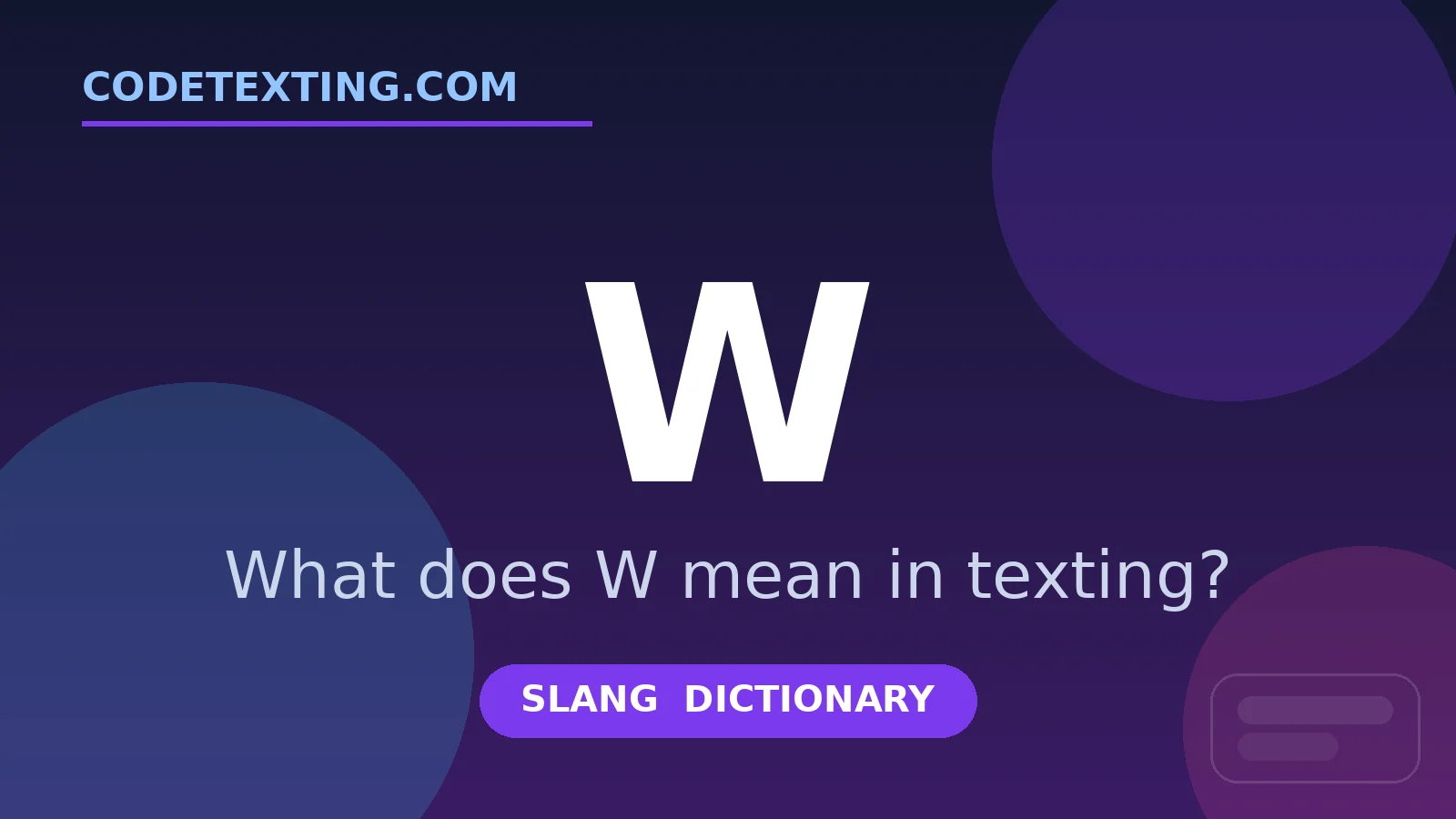
At its simplest level, the letter W stands for the word win. In the world of online slang, it is used to describe a successful outcome, a moment of triumph, or an action that is worthy of praise.
When someone calls something a W, they are signaling that they approve of the situation or that the person involved has achieved something positive. It is the direct opposite of an L, which stands for loss.
Think of it as a shorthand way to offer a digital high five. If your friend tells you they just landed a new job or finished a difficult project, saying W is a way to acknowledge their success without typing out a long sentence. It is efficient, punchy, and fits perfectly into the rapid-fire nature of modern communication.
Real-life usage often looks like this:
Person A: I finally passed my driving test today!
Person B: That is a huge W, congratulations!
In this example, the meaning is clear. It turns a standard congratulatory message into something that feels more current and aligned with internet culture. It is not just about big life events, either.
You might see it used for small victories, like finding a good parking spot or getting a discount on a purchase. Because it is so flexible, it has become one of the most common terms used by creators and fans across all major platforms.
The History and Evolution of the Term
The origins of using single letters to represent complex concepts are rooted deep in gaming culture. For decades, gamers have used shorthand to communicate quickly during fast-paced matches. In competitive play, you do not have time to type out a full paragraph.
You need to convey your message in a split second. The terms W and L emerged naturally as a way to track the score of a match or the outcome of a specific play.
As streaming platforms like Twitch became more popular, the language of gaming spilled over into broader social media spaces. Influencers and content creators began using these terms in their daily videos, and their audiences adopted the language almost immediately. What started as a niche way to talk about victory in a video game evolved into a universal way to label any positive event in real life.
Today, the term has moved beyond just gaming. It is now a part of the standard vocabulary for Gen Z and beyond. It has been absorbed into the mainstream because it perfectly captures the brevity that users demand today.
While some older generations might find it confusing, it has become a foundational piece of the digital lexicon. You can read more about how language shifts in the digital age through the Merriam-Webster guide to slang, which tracks how words evolve to meet the needs of their speakers.
Usage Across Different Digital Contexts
You will find this term everywhere, but the way it is used changes depending on where you are looking. On platforms like Twitter or Instagram, it is often used as a standalone comment.
If an athlete makes a great play or a celebrity does something kind, the comments section will be flooded with Ws. It is a way for a community to show collective support.
In texting, it is more personal. It serves as a quick validation of whatever the other person is saying. In gaming, it is still used in its original context, often referring to a win in a ranked match or a clutch play that saved the team.
Consider these dialogue examples:
Scenario 1 (Texting):
Friend 1: I just finished that marathon I was training for.
Friend 2: Massive W! So proud of you.
Scenario 2 (Gaming Chat):
Player 1: We managed to hold the objective for the full duration.
Player 2: Huge W, great teamwork everyone.
Scenario 3 (Social Media):
User A: This new movie is actually incredible.
User B: Big W, I agree.
The letter acts as a badge
In each of these cases, the letter acts as a badge of approval. It is a low-effort way to provide high-value positive feedback. Because it is so short, it does not interrupt the flow of the conversation, making it a favorite for people who value speed and clarity in their digital interactions.
Common Misconceptions and Clarification
One of the biggest misconceptions about this term is that it is always used ironically. While some people do use it in a sarcastic way, the primary intent is almost always positive.
If someone says W in response to a bad situation, they might be using it to mock the person, but that is the exception rather than the rule. Context is everything.
Another common point of confusion is whether the term is appropriate for everyone. Some people worry that using slang makes them sound unprofessional or immature.
However, because the term is so widespread, it has lost some of its edge. It is now widely understood by people of all ages, even if they choose not to use it themselves.
It is also important to clarify that this term is not a replacement for genuine conversation. If a friend tells you something significant, replying with a single letter might feel dismissive. It is best used as an addition to a supportive message rather than the entire response.
Using it alongside words like congratulations or amazing keeps the tone warm and sincere. Always remember that tone is hard to read over text, so pairing your slang with clear, kind words is usually the best approach to avoid being misinterpreted.
Similar Terms and Alternatives
The digital world is full of synonyms for success. While W is the most popular, there are other ways to express the same sentiment depending on the vibe you want to set. Some people prefer to use emojis, while others stick to more traditional words.
Here is a quick look at how these terms compare:
| Term | Meaning | Context |
|---|---|---|
| W | Win | Casual, gaming, social media |
| GG | Good Game | Gaming, sportsmanship |
| Big dub | Big win | Highly enthusiastic |
| GOAT | Greatest of all time | High praise for skill |
| Legend | High respect | Celebrating a person |
Using these terms interchangeably can help you vary your language. If you feel like W is becoming too repetitive, swapping it for something like big dub or a simple trophy emoji can keep your interactions feeling fresh. The goal is to choose the word that best fits the intensity of the achievement you are celebrating.
If it is a small victory, W is perfect. If it is a life-changing event, you might want to use a more descriptive phrase to show how much you care.
How to Respond to This Term
When someone sends you a W, they are essentially giving you a compliment. How you respond depends on the relationship you have with that person and the situation at hand.
If you are in a casual setting, you can simply acknowledge the sentiment.
Example:
Friend: You got the promotion? That is a huge W!
You: Thanks! I am pretty excited about it.
If you are in a professional but friendly environment, you might want to be a bit more formal while still keeping the energy high.
Example:
Colleague: That presentation was a massive W for the team.
You: I appreciate that! It was definitely a group effort.
If you are being privacy-conscious or formal, you do not have to mirror the slang back. You can just express your gratitude in standard English. The beauty of digital language is that you are never obligated to use the same terms as the person you are talking to.
If you are not comfortable with slang, you can simply say thank you and move on. The person sending the W will still understand that you appreciate their positive energy.
Regional and Cultural Differences
Language is never static, and slang often varies by region. While W is a global term thanks to the internet, you might find that different communities have their own unique ways of celebrating a win. In some parts of the world, local slang might take precedence over internet-native terms.
However, because platforms like Twitter and TikTok are global, the reach of W is truly international. Whether you are in New York, London, or Tokyo, you will find people using this term to celebrate success. It is a rare example of a truly universal piece of digital slang.
That said, cultural nuances still exist. In some more conservative or formal cultures, people might avoid using slang altogether, preferring a more traditional way of offering congratulations.
When communicating with people from different backgrounds, it is always a good idea to gauge their comfort level with internet speak. If you are unsure, stick to standard language until you see them use slang first. This is a safe way to ensure you are building a connection without crossing any invisible lines of etiquette.
Usage in Online Communities and Dating Apps
In the world of dating apps like Tinder or Hinge, the term is often used as a way to signal shared interests. You might see someone mention that they are looking for a partner to share some Ws with, which is a playful way of saying they want to achieve goals together or enjoy life’s successes as a team.
On platforms like Twitter, it is frequently used to participate in trending topics. If a popular creator posts about a success, the comment section turns into a race to see who can post the most creative W-related comment.
It is a way of building community. By participating in these trends, you are signaling that you are part of the conversation.
When using these platforms, keep in mind that brevity is key. People are scrolling quickly, so a short, punchy comment is more likely to get noticed than a long, drawn-out explanation. Using the term effectively can make you seem more approachable and in tune with the current digital culture, which is often a plus in social and dating contexts.
Hidden or Offensive Meanings
It is important to address whether this term can ever be offensive. Generally, W is a very safe and positive term. It does not carry the baggage that some other slang terms do.
However, as with any language, tone and context are everything. If someone uses it to gloat or make others feel bad about their losses, it can come across as rude or arrogant.
There are no widely recognized offensive or hidden meanings behind the letter W in this context. It is not a secret code for anything inappropriate. If you see it being used in a way that feels off, it is likely because of the specific person or the specific situation, not because of the word itself.
Always look at the intent behind the message. Is the person trying to be supportive, or are they trying to tear someone else down? If the intent is kind, the term is harmless.
Suitability for Professional Communication
Is it ever okay to use this in a professional setting? The answer depends entirely on your workplace culture.
If you work in a creative agency, a tech startup, or any environment that values a relaxed and collaborative atmosphere, using W might be perfectly fine. It can help build camaraderie and keep the mood light.
However, in more traditional industries like law, finance, or corporate management, it is usually better to avoid it. Using slang in an email to a client or a formal report can make you seem unprofessional. There are plenty of professional alternatives that convey the same level of enthusiasm without the risk of sounding too casual.
Instead of W, consider using:
– That is a great outcome.
– We achieved a fantastic result.
– This is a significant success for the team.
– Well done on reaching this milestone.
These phrases are universally understood and carry a level of maturity that is expected in a professional environment. You can still be enthusiastic without relying on internet slang.
How do I respond to a
6. How do I respond to a W if I do not like the term?
You do not have to use it back. A simple thank you is always sufficient and polite.
7. Does W have any secret meanings?
No, it is a straightforward term used to celebrate success.
Understanding the language of the internet is a great way to stay connected in our fast-paced world. While W might seem like a small detail, it represents the way we have all learned to communicate more efficiently and effectively across digital spaces. Whether you are using it to celebrate a friend’s big win or just keeping up with the latest trends on your social media feed, you now have the tools to use this term with confidence.
Just remember that the best communication is always rooted in sincerity. Even when using the shortest slang, your intent and your kindness are what will truly shine through in your conversations. Keep it simple, keep it positive, and enjoy the wins as they come.
Discover More:-
- KIN Meaning Slang: What Does “Kin” Mean in Text, Social …
- Buns Meaning Slang | What Does “Buns” Really Mean in Text …
- What Does ZA Mean in Slang? – CodeTexting.com
Frequently Asked Questions
Does W always mean win?
Yes, in the context of slang, it almost always refers to a win or a success.
Can W be used negatively?
Only if used sarcastically, but it is not its primary function.
Should I use W in a formal email?
No, it is best to stick to formal language in professional settings.
Is W popular only with Gen Z?
It started with Gen Z and gamers, but it is now widely understood by most internet users.
Is there a difference between W and a win?
W is just a shorthand version. They mean the exact same thing.
What does W mean in texting?
At its simplest level, the letter W stands for the word win. Simple as that. Keep reading for real examples of how people actually say it.
How do you use W in a sentence?
Best move: steal the pattern from the examples above. W works when the vibe is relaxed. Forced slang always sounds off.
Can I use W with anyone?
Friends, yes. Work chat, no. W is informal by nature, so save it for people who already talk casually with you.
How should you reply when someone says W?
Match their energy. If a friend drops W jokingly, laugh it off or fire back with your own slang. If a stranger says it coldly, do not engage.
Where do people use W the most?
Mostly DMs and comment sections. W is built for fast, casual typing, so it thrives wherever people chat quickly.