Have you ever scrolled through your social media feed and seen a post that starts with the letters PSA? Perhaps a friend sent you a text with this acronym, or you noticed it popping up in a heated debate on a gaming forum. If you have ever felt confused by these three letters, you are not alone.
This term has moved far beyond its formal roots to become a staple of digital communication. Whether you are a student, a professional, or someone who spends time on TikTok, knowing how to use this acronym is essential.
It helps you understand the intent behind a message and ensures you stay in the loop with modern internet culture. In this article, we will break down exactly what this term means, how it evolved, and why it matters in your daily life.
Defining the Term and Its Core Meaning
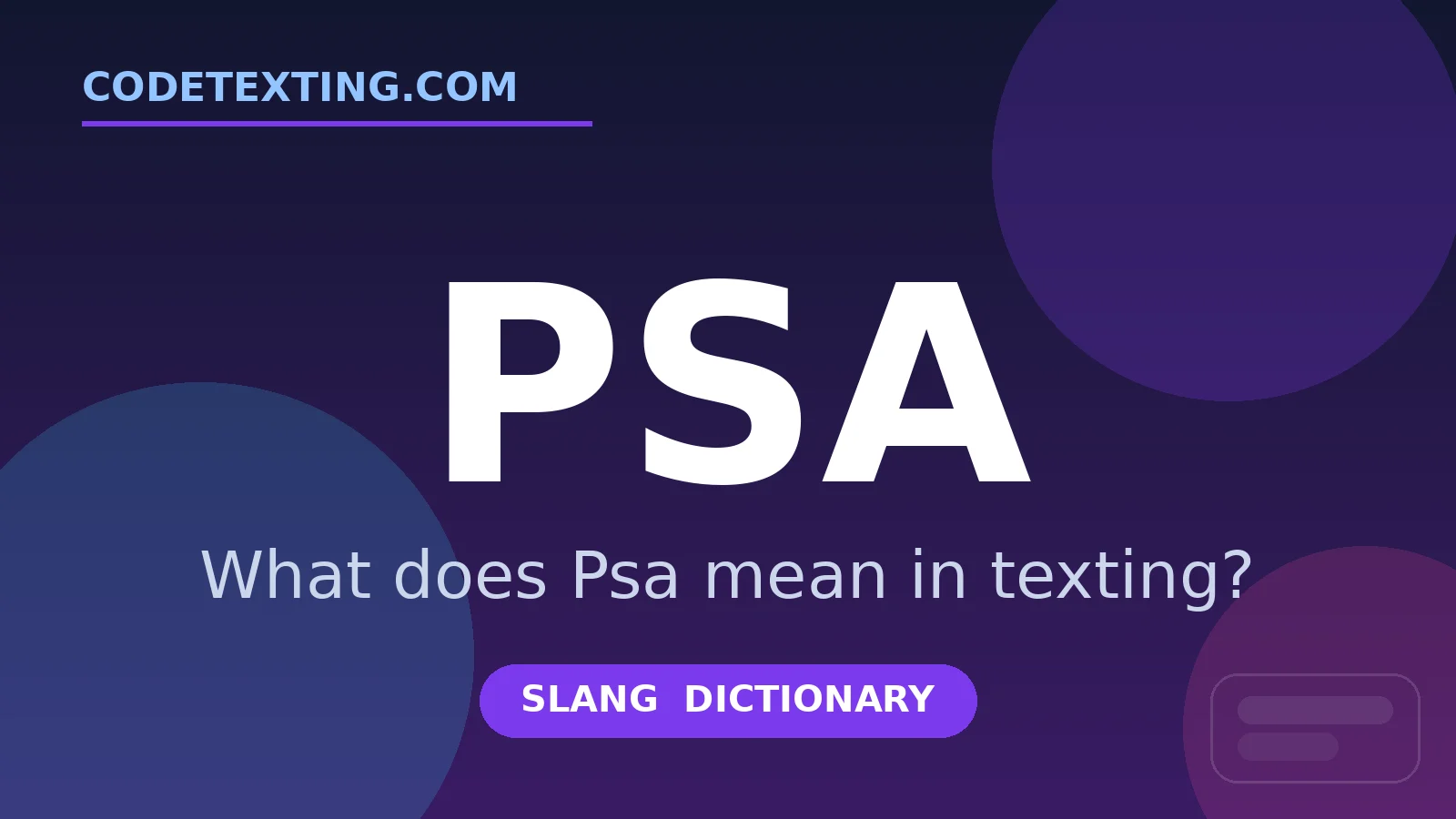
At its most basic level, PSA stands for Public Service Announcement. Historically, this term refers to a message spread in the interest of the public. These were traditionally broadcast on television or radio to provide important information, such as health warnings, safety tips, or government notices.
In the physical world, a PSA might tell you how to avoid forest fires or why you should get a specific vaccine. It is meant to be informative, neutral, and helpful for the general population.
However, the meaning has shifted significantly in the digital age. Today, when someone uses this acronym on social media or in a text message, they are often making a statement that they feel is important for their specific audience to know. It has become a way to grab attention before delivering a piece of news, an opinion, or even a sarcastic remark.
For example, a person might post, PSA: stop leaving your dishes in the sink for days. In this context, the user is not acting as a government official. Instead, they are using the term to frame their personal frustration as a “public” service to their roommates or followers.
The term has become a stylistic choice that adds weight to the sentence that follows it. It signals to the reader that the upcoming information is something they should pay close attention to.
The Evolution and Historical Context
The term originated in the mid-20th century, primarily within the United States. During the post-war era, the government and various non-profit organizations realized they needed a way to reach citizens quickly. They started using the term to categorize messages that were free of charge and intended for the public good.
These messages were often short, punchy, and designed to influence behavior. You can learn more about the history of such messaging through the Library of Congress collection of historical announcements.
Over the decades, the concept became ingrained in society. By the time the internet arrived, the acronym was already well-known. As social media platforms began to grow, users looked for ways to categorize their content.
They adopted the acronym because it felt authoritative and urgent. In the early days of forums and chat rooms, people used it to announce rules or provide helpful tips to newcomers. As the years went on, the term became more informal.
By the time platforms like Twitter and TikTok became mainstream, the acronym was being used for almost anything. It transitioned from a formal, institutional tool to a casual, everyday expression.
Today, it is a piece of internet slang that bridges the gap between serious warnings and lighthearted jokes. This evolution shows how language adapts to the speed of digital interaction.
Usage Across Different Digital Platforms
The way we use this term changes depending on where we are online. On platforms like TikTok, creators often use it to start a video where they share a life hack or a piece of advice.
For instance, a beauty vlogger might say, PSA: you should always double cleanse your skin at night. This usage is helpful and fits the traditional definition of sharing knowledge.
In text messaging and group chats, the tone is often more personal or humorous. If a friend sends a message saying, PSA: I am officially deleting my dating apps, they are using the acronym to make a major life update sound more dramatic or noteworthy. It acts as a conversational marker.
In gaming, the usage can be more functional. Players might use it in a chat box to warn others about a bug in the game or a change in server rules.
Here is how it might look in a real-world dialogue:
Player A: PSA: the boss fight is glitched, do not enter the dungeon right now.
Player B: Thanks for the heads up, I almost walked in there.
In this case, the term serves its original purpose of keeping the community safe and informed. The versatility of the acronym is exactly why it remains so popular across every corner of the internet.
Common Misconceptions and Clarifications
One common misunderstanding is that using the term always implies a serious or medical message. Because the word “Public” is in the acronym, some people assume that it must be related to official news or government business. This is rarely the case in modern usage.
If you see a post that says, PSA: I love iced coffee, you should not expect a serious announcement about the economy. The user is simply expressing a strong preference using a format that feels fun and slightly hyperbolic.
Another misconception is that it must be used to address a large group of people. While it implies a “public” audience, people often use it to address a single person or a very small group. For example, a person might send a text to their partner saying, PSA: I forgot to pick up the milk.
Even though the audience is just one person, the term is used to emphasize that the message is important and needs to be read immediately. It is essentially a way of saying, “Listen to me, this is important.”
Context is the most important factor when deciding how to interpret the term. If the message seems trivial, it is likely just a joke or an attention-grabbing tactic.
Alternatives and Similar Expressions
If you want to avoid using this acronym, there are several ways to express the same sentiment. Depending on your goal, you might choose a different phrase that fits the tone of your message better. If you are sharing a tip, you could use “Just a heads up” or “Quick tip.”
These phrases are softer and less demanding than the acronym. If you are sharing news, “Breaking news” or “Just wanted to let everyone know” works well.
Here is a comparison of how these phrases differ:
– PSA: High urgency, often a bit dramatic or humorous.
– Heads up: Casual, friendly, and low pressure.
– Pro tip: Specifically used for advice or life hacks.
– Announcement: Formal, serious, and professional.
Using these alternatives can help you adjust your tone. If you feel like the acronym is too overused or sounds a bit aggressive for your style, switching to “Heads up” is a safe and polite choice. It conveys the same meaning without the baggage of the formal acronym.
Responding to the Term
How you respond depends entirely on the content of the message. If a friend uses it to make a joke, you can respond with humor.
Friend: PSA: I have decided that pizza is a food group.
You: Agreed, I think we should make that official law.
If someone uses it to share actual advice, you should acknowledge the value of the information.
Friend: PSA: Make sure you update your phone settings for better security.
You: Oh, I had no idea, thanks for sharing that!
If you are in a professional setting and someone uses it, you might want to mirror their tone if it is appropriate, or choose a more formal response. If you are feeling privacy-conscious, you might simply ignore the dramatic flair and focus on the information provided. The goal is to show that you have received the message and understood the intent, whether that intent was to inform, joke, or warn.
Regional and Cultural Variations
The term is widely understood in English-speaking countries, but its usage varies. In the United States, it is a very common piece of internet slang.
In the United Kingdom or Australia, people also use it, but they might be more likely to use terms like “Public Notice” or “Heads up” in professional settings. The acronym itself remains recognizable globally due to the influence of American media and the internet.
Interestingly, in non-English speaking cultures, the acronym might not be used at all. Instead, people will use the local equivalent of “Important notice” or “Attention.” As global communication increases, the English version of the acronym is being adopted by younger generations in many countries, especially those who spend a lot of time on international platforms like Instagram or Twitter.
However, it is always a good idea to be mindful of your audience. If you are communicating with someone who does not spend much time on social media, they might be confused by the acronym regardless of their culture.
Professional Communication and Suitability
Is it appropriate to use this term in a professional setting? The answer is: it depends.
In a modern, relaxed office environment or a startup, using the term to announce an important office update or a helpful tip is generally acceptable. It can add a bit of personality to your emails or Slack messages.
However, in a formal or high-stakes environment, it is best to avoid it. Using an internet acronym in a formal report or a serious client email can make you appear unprofessional or flippant. Instead of saying, “PSA: We are changing the meeting time,” you should say, “Please be advised that the meeting time has changed.”
This sounds more respectful and clear. Always consider the culture of your workplace before adopting slang.
If your company uses a formal tone, stick to professional language. If your team is collaborative and digital-first, a well-placed acronym can be a great way to communicate quickly and effectively.
Is it an acronym or an
6. Is it an acronym or an initialism?
Technically, it is an initialism because you pronounce the letters individually, but it is commonly referred to as an acronym in casual conversation.
Conclusion
Understanding the way we communicate online is key to navigating the modern world. The term we have discussed today is a perfect example of how language evolves to meet the needs of a digital society. From its origins as a serious, formal tool for public safety to its current status as a versatile piece of internet slang, it has proven its staying power.
While it is easy to use, remember that context is everything. Whether you are using it to share a helpful tip, make a joke, or warn your friends about a change in plans, keep your audience in mind.
By choosing the right words for the right situation, you can ensure your message is always received exactly as you intended. Keep observing how others use language, and you will find that you can adapt to any conversation, whether it is on a screen or in person.
Frequently Asked Questions
Does the term always mean something serious?
No, it is frequently used to make jokes, share opinions, or highlight minor daily observations.
Can I use it in an email to my boss?
Only if your workplace culture is very casual. In most professional settings, it is better to use formal language.
Why do people use it on TikTok?
It is a great way to stop the scroll. It tells the viewer immediately that the video contains useful information.
What does PSA mean in texting?
At its most basic level, PSA stands for Public Service Announcement. That is the short version. The full breakdown with examples is in the sections above.
How do you use PSA in a sentence?
Honestly, the examples above teach it faster than any rule. Watch how PSA sits in a real reply, then copy that rhythm.
Why do people say PSA instead of plain English?
It is shorter and cooler than the formal version. Slang like PSA is social currency. Using it right says you belong.
Is PSA rude or offensive?
On its own, PSA is not a swear, but tone does the heavy lifting. Said coldly to the wrong person, any slang stings. Keep it friendly.
How should you reply when someone says PSA?
Read the tone first. Playful PSA gets a playful reply. Cold PSA is a sign to end the chat, not win it.