Your friend texts you that your cooking could feed a whole street, then adds three letters: “jsp”. Are they joking, or are they dropping a firm opinion and walking away? The honest answer is that you cannot tell from the letters alone.
Here is the short answer: JSP usually means “Just Playing”. It is a quick tag that flags a joke, so nobody takes a tease seriously. But JSP has no single settled meaning, and the same letters can also end a firm opinion or say “I don’t know” in French, so the chat around it always decides.
In this guide you will learn the jsp meaning in text, why the lead is “just playing”, how to tell the readings apart, where JSP shows up, and what to send back.
What Does JSP Mean in Text?
JSP is a context decoder disguised as an abbreviation. The sentence before it, the platform, and the language of the chat pick the right reading.
When a friend says “you lost again, that was embarrassing, jsp”, you are looking at a joke that needs a safety valve. When a friend says “that plan will never work, jsp”, you may be looking at a firm opinion with a full stop behind it.
Quick definition: JSP usually means “Just Playing”. In English texting and social media it flags a joke or a teasing comment as not serious. It can also mean “Just Saying, Period” or “Just Saying, Please” when it ends a firm opinion, and in French texting lowercase “jsp” means “je ne sais pas”, which is “I don’t know”.
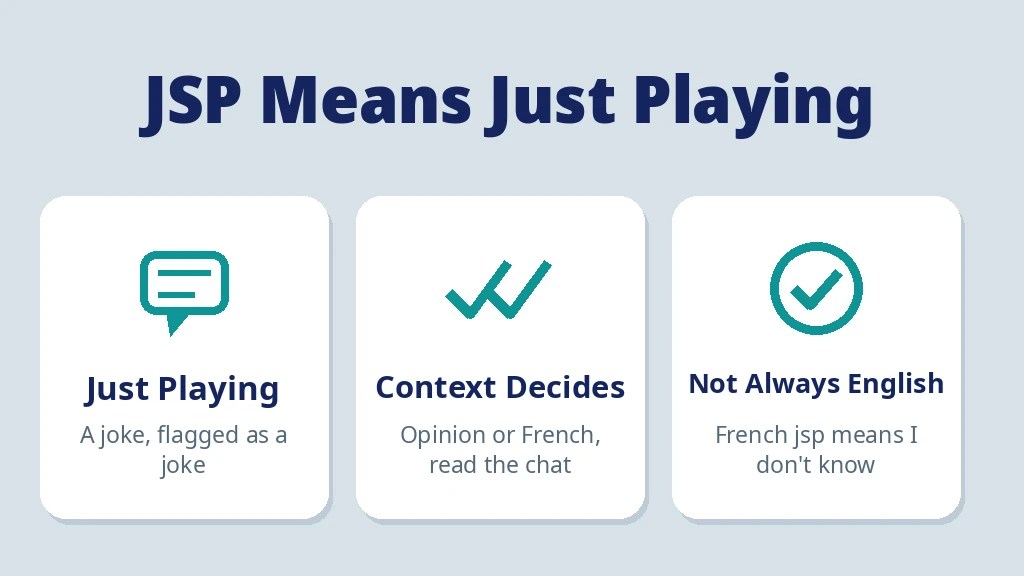
The sources agree that JSP is contested, and they split on which reading leads. CyberDefinitions says “just playing” is by far the most common meaning for JSP when it is used in a text, and notes that JSP is being seen more and more commonly, especially on TikTok. Wiktionary documents the French reading, listing lowercase “jsp” as internet slang and text messaging shorthand for “je ne sais pas”, meaning “I don’t know”. The niche guides show the split plainly: the first of the top three says outright that JSP does not have one universally accepted meaning, the second leads with “just playing”, and the third leads with “just saying, period”, calling “just playing” a second, equally popular reading.
JSP Meaning in Easy Words
Think of JSP as a label that says “read the message before it in this tone”. That is the jsp meaning in one image.
When someone tells a joke out loud and then grins, the grin is the label that says “I was only playing”. JSP is the typed version of that grin.
In the simplest words:
JSP = “Take that as a joke” most of the time, but check the chat first, because it can also mean “that is my final word” or, in French, “I don’t know”.
Where Is JSP Used?
As jsp slang, JSP lives in casual chats between people who share some context, and it almost never leaves that world.
Common places:
- Private texts and DMs, as a safety valve after a joke or tease
- Group chats, where one “jsp” keeps a roast from starting a real argument
- Instagram and TikTok comments, answering a post with a playful jab
- French-language chats, where lowercase “jsp” is the “I don’t know” tag
Typical situations:
- A friend sends a teasing insult and wants it to read as a joke
- Someone drops a firm opinion and wants to end the discussion there
- A French speaker answers a question they cannot answer
Why Do People Use JSP?
It stops a joke from landing as an insult
A tease without a marker can sting, and JSP is the cheapest way to stop it. The same sentence without JSP reads as a real jab. With JSP at the end, it reads as a grin.
It ends an opinion with a full stop
Sometimes you want to say your piece and stop there. The “just saying, period” reading of JSP does exactly that.
It is shorter than explaining the tone
JSP is three letters instead of a whole sentence of explanation, and in a fast chat that difference matters. The meaning survives the cut, and the conversation moves faster.
Real-Life Examples of JSP
Here is how JSP actually shows up in chats and comments:
Example 1:
- Chat: “I can’t believe you did that! Nah, jsp, I know you wouldn’t.”
Meaning: “Just Playing”, a shocked reaction flagged as a joke.
Example 2:
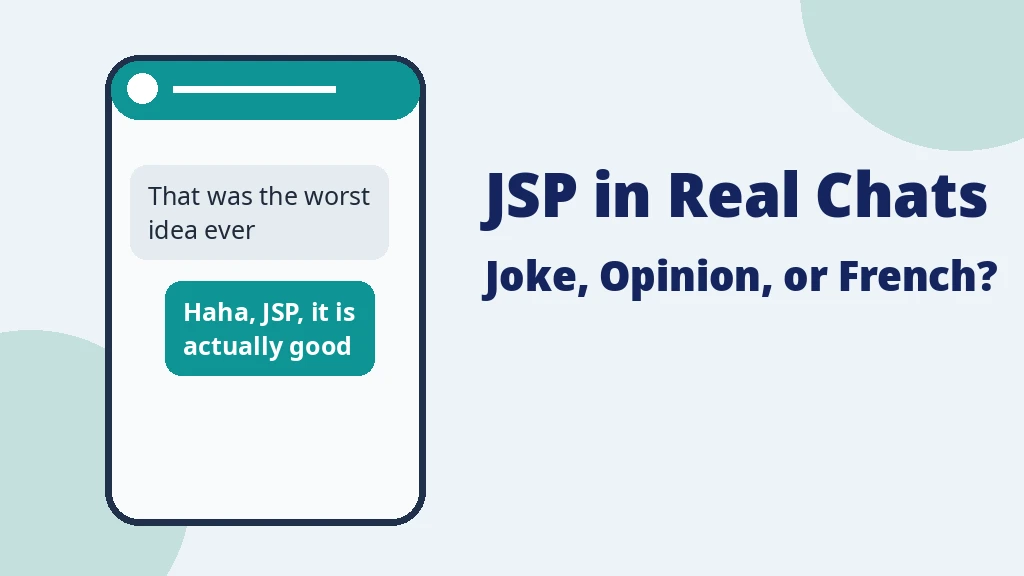
- Chat: “That was the worst idea ever! Haha, jsp, it’s actually pretty good.”
Meaning: “Just Playing”, a harsh verdict that was only a tease.
Example 3:
- Chat: “You might want to call her back, jsp.”
Meaning: “Just Saying, Period”, a firm opinion, and the sender is done.
Example 4:
- Chat: “Jsp what he meant by that.”
Meaning: French “je sais pas”, “I don’t know”, the sender cannot work out what someone meant.
Example 5:
- Comment: “Nice outfit, jsp, you always look good.”
Meaning: “Just Playing”, a playful tease ending in a compliment.
JSP vs Similar Terms
| Term | Meaning | When to use it |
|---|---|---|
| JSP | Just Playing (usually) | Flagging a joke, or ending a firm opinion, context decides |
| JP | Just Playing | The settled two-letter form, always a joke flag |
| JS | Just Saying | Softening an opinion at the end of a sentence |
| JK | Just Kidding | Cancelling the truth of what you just said |
| IDK | I Don’t Know | The English match for the French jsp reading |
Key difference: JP is the settled form of “just playing”, and it means one thing. JSP is the longer, contested form, and it can mean “just playing” or a firm “just saying” reading, so it always needs context. JS is the clean opinion softener, and JSP only borrows that job when it ends a firm statement. JK cancels the truth of a statement, while JSP as “just playing” cancels only its seriousness. For the warmest way to agree with someone, here is what IKR means in text, the “I know, right?” that invites the other person to agree with you.
Keep JSP apart from JP as well. JP is short, settled, and safe: everyone who knows it reads it as “just playing”. JSP is longer, newer, and split: the same letters can close a debate or answer “I don’t know” in French.
The Other JSP Meanings You Should Know
“Just Saying, Period” is the main rival reading. It ends a firm opinion with finality, like saying “that is my final thought”. If the message before JSP is a serious opinion with no joke in it, this is the reading that fits.
“Just Saying, Please” is a softer cousin. It ends an opinion with politeness instead of finality, aiming to make a blunt comment sound less harsh.
In French texting, lowercase “jsp” means “je ne sais pas”. Wiktionary documents this reading, listing “jsp” as internet slang and text messaging shorthand for “je ne sais pas”, meaning “I don’t know”. If the chat is in French, or the sender mixes French slang into English chats, this is the reading to pick.
Outside texting, JSP is a tech term. In web development, JSP stands for JavaServer Pages, later renamed Jakarta Server Pages, a technology from 1999 for building dynamic web pages. None of this belongs in a chat about a joke, and the tech reading only applies when the conversation is about code.
Context rule in one line: a joke or tease before JSP means “just playing”, a firm opinion before JSP means “just saying, period” or “just saying, please”, and a French chat means “I don’t know”.
How to Reply to JSP
Your reply depends on which JSP you received.
If it was “just playing”: laugh it off and keep the joke going. “Haha, I knew it” or a laughing emoji is enough. For a reply that flags your own view as personal, here is what IMO means in text, the “in my opinion” that marks a take as yours and nobody else’s.
If it was “just saying, period”: accept that the speaker is done, and do not push for a longer debate. “Fair enough” or “noted” is the safest reply.
If it was the French “I don’t know”: treat it like IDK and move on. A simple “no worries” keeps the chat friendly.
If you want to use JSP yourself: use it only where the people reading it already know your meaning. After a joke, it is a clean safety valve. After a firm opinion, it can sound closed or passive aggressive, so save that reading for chats where it will not be misread.
When to Use JSP (and When to Avoid It)
Good situations:
- Flagging a joke or tease so it reads as playful
- Answering “I don’t know” in a French-language chat
Avoid using JSP when:
- You are talking to a teacher, a boss, or anyone formal
- You want a clean joke flag, since JP is the settled form for that job
- You are writing code or talking tech, where JSP means JavaServer Pages
Common Misunderstandings About JSP
JSP does not have one fixed meaning. This is the biggest misunderstanding, and it comes from treating JSP like a settled term. Several guides say outright that it has no universally accepted meaning.
JSP is not the same as JP. JP is the settled two-letter form of “just playing”, and everyone who knows it reads it the same way. JSP overlaps JP, but it also carries the “just saying” readings and the French reading, so the two are cousins, not twins.
JSP is not the same as JS. JS is the clean “just saying” softener, and it means one thing at the end of a sentence. JSP only borrows that job when it ends a firm opinion.
JSP is not always English. In French chats, lowercase “jsp” is a common “I don’t know”, and it is documented in Wiktionary.
Frequently Asked Questions
What does JSP mean in text?
JSP usually means “Just Playing”, a quick tag that flags a joke or teasing comment as not serious. It has no single settled meaning, so it can also mean “Just Saying, Period” or “Just Saying, Please” after a firm opinion, and “I don’t know” in French texting.
What does JSP mean on TikTok?
On TikTok, JSP is increasingly used as “Just Playing” after jokes and teasing comments. In French-language TikTok, lowercase “jsp” usually means “je sais pas”, or “I don’t know”, so the language of the video or comment decides.
What does JSP mean in French?
In French texting, lowercase “jsp” is short for “je ne sais pas” or “je sais pas”, which means “I don’t know”. Wiktionary documents this as internet slang and text messaging shorthand. It is the same tag English speakers write as IDK.
What is the difference between JSP and JP?
JP means “Just Playing” and is the settled two-letter form with one clear reading. JSP overlaps it but is contested: it can also mean “Just Saying, Period”, “Just Saying, Please”, or the French “I don’t know”. JP is the safer joke flag, JSP always needs context.
What is the difference between JSP and JS?
JS means “Just Saying” and softly ends an opinion. JSP can borrow that job as “Just Saying, Period” or “Just Saying, Please”, but it adds finality or politeness, and its usual lead is “Just Playing” instead. JS is the simple softener, JSP is the ambiguous cousin.
Does JSP mean JavaServer Pages?
In web development, yes, JSP stands for JavaServer Pages, later Jakarta Server Pages, a technology from 1999. In a normal text or comment, JSP means “Just Playing” or one of the “just saying” readings. The conversation around it tells you which one fits.
Is JSP rude?
Usually it is not. As “just playing” it softens a joke and keeps a chat friendly. As “just saying, period” it can sound closed or passive aggressive when it follows a sharp opinion, so use it carefully and only where the reader knows your meaning.
Final Thoughts
JSP is the rare slang term that refuses to settle down. It usually means “just playing”, and that is the reading to reach for first, but the same letters can close a firm opinion or say “I don’t know” in French. The letters are only half the message, and the chat around them is the other half.
Now you can read it at a glance: a joke or tease before JSP means “just playing”, a firm opinion before JSP means “just saying, period” or “just saying, please”, a French chat means “I don’t know”, and a code chat means JavaServer Pages. The next time JSP shows up in your messages, read the sentence around it before you decide.
The lead is documented by CyberDefinitions, which calls “just playing” by far the most common meaning for JSP in a text, and notes it is being seen more and more, especially on TikTok. Wiktionary documents the French reading, listing lowercase “jsp” as internet slang and text messaging shorthand for “je ne sais pas”, meaning “I don’t know”. For the warmest way to agree with someone, here is what IKR means in text, the friendly “I know, right?” that never sounds dismissive.