Your friend shows you their new sneakers, the ones they saved up for all month. You could type “cool”. You could type “nice”. Instead you type “kewl”. They laugh, because the spelling is doing half the talking.
Here is the short answer: KEWL means “Cool”. It is a playful spelling of the word cool, used to say something is good, stylish, fun, or impressive. It is the same approval as “cool”, with a wink built into the letters.
In this guide you will learn the kewl meaning in text, how the spelling changes the feeling, where KEWL shows up, why people choose four letters over the normal word, and what to send back when someone sends it to you.
What Does KEWL Mean in Text?
KEWL is not an abbreviation. It is a spelling, a deliberate misspelling of “cool” that says the same thing in a more playful voice. When someone types KEWL, they are not saving time, because KEWL is one letter longer than cool. They are adding personality, and that is the whole point.
When a friend says “I got the tickets” and you reply “kewl”, you are saying “that is great, I like it”. When a friend says “I got another parking ticket” and you reply “kewl”, you are saying the same word, but the joke is in the spelling: the misspelling tells them you are being ironic, not sincere.
Quick definition: KEWL means “Cool”. In texting and social media it is a playful, informal spelling of cool, used to say something is good, relaxed, stylish, or fun. The spelling itself often signals that the writer is being playful or ironic.
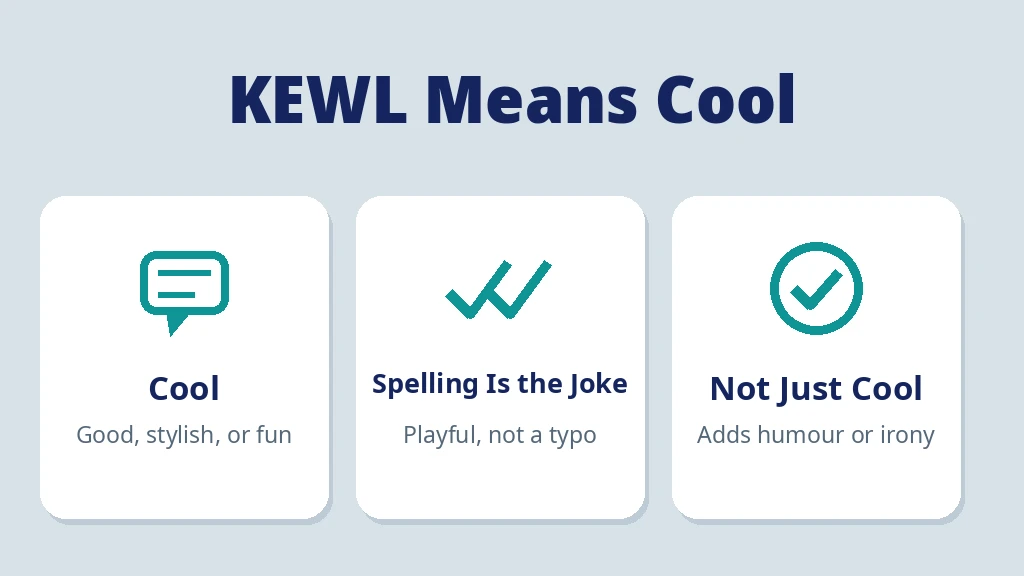
The sources agree on the expansion, and they agree on the playful edge. CyberDefinitions says KEWL means “Cool”, and adds that it is an alternative spelling of cool, meaning good, relaxed, or stylish. The bab.la dictionary lists KEWL as a non-standard spelling of cool, and dates it to the 1990s, as a representation of an affected or exaggerated pronunciation of cool. The niche guides that rank for this term say the same thing in different words: all three of the top three lead with “Cool”, and each one stresses that the spelling is deliberate, not a typo. Etymonline dates “kewl” to 1996, as a graphic representation of a casual pronunciation of cool, and Wiktionary lists it as internet slang, restricted to the colloquial meaning of popular.
KEWL Meaning in Easy Words
Think of KEWL as “cool” wearing sunglasses. That is the kewl meaning in one image.
When someone says “cool” in person, you hear the word and you move on. When someone types “kewl”, you see the word and you smile first, because the spelling is a small joke before the meaning even lands. It is the typed version of saying “cool” with a grin.
In the simplest words:
KEWL = “Cool, and I am saying it in a fun way.”
Where Is KEWL Used?
As kewl slang, KEWL lives in playful, informal corners of the internet, and it almost never leaves that world.
Common places:
- Private texts and DMs, as a light-hearted reaction to good news
- Group chats, where the spelling gets a laugh out of a plain compliment
- Social media posts and captions, where the retro spelling sets a fun tone
- Instagram and TikTok comments, often as ironic approval under a post
- Gaming chats and early internet forums, where the spelling was born
Typical situations:
- A friend shares good news and you want to celebrate it casually
- Someone shows off something new, like shoes, a photo, or a song
- You want to say “cool” but the plain word feels too flat
- You are joking, and the misspelling is the signal that you are not serious
- A retro or nostalgic post needs a reply that matches its style
Why Do People Use KEWL?
It adds personality to a plain word
“Cool” is one of the most used words in English, and it can feel flat after the hundredth time. KEWL refreshes it. The spelling says “I am not just approving, I am having fun approving”, and that small change keeps a tired word alive.
It signals irony without an emoji
Sometimes “cool” is not meant sincerely. A friend tells you they failed a test, and “cool” would sound heartless. “Kewl” sounds like a joke, because the spelling itself is a joke. The misspelling creates distance between the word and the feeling, and that distance is where the irony lives.
Real-Life Examples of KEWL
Here is how KEWL actually shows up in chats and comments:
Example 1:
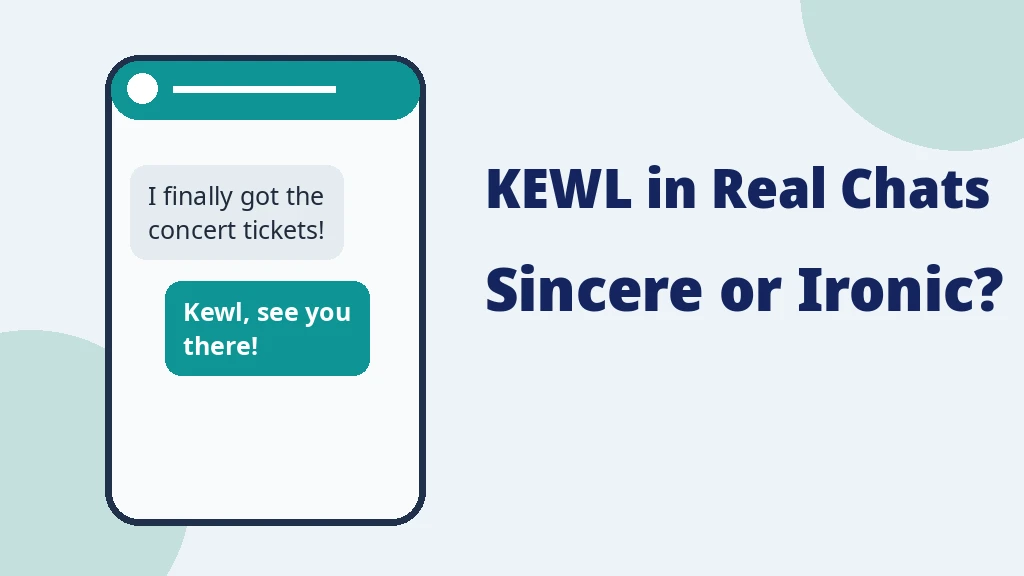
- Chat: “I finally got the concert tickets!” “Kewl, see you there!”
Meaning: Warm approval, the sender is genuinely excited for their friend.
Example 2:
- Chat: “I have to work all weekend again.” “Kewl.”
Meaning: Ironic approval, the sender is joking about bad news, not celebrating it.
Example 3:
- Comment: “Check out my new bike!” “Kewl ride!”
Meaning: Playful compliment, the spelling makes a plain compliment feel fun.
Example 4:
- Chat: “We are meeting at 8, kewl?” “Kewl, I will be there.”
Meaning: Casual agreement, the sender uses KEWL as a friendly “sounds good”.
Example 5:
- Chat: “Look what I found at the market.” “Kewl beans!”
Meaning: Playful excitement, the fixed phrase “kewl beans” turns approval into a joke.
KEWL vs Similar Terms
| Term | Meaning | When to use it |
|---|---|---|
| KEWL | Cool | Playful or ironic approval |
| Cool | Cool | Plain approval, works anywhere casual |
| KEW | Cool | The shorter spelling, same meaning |
| Awesome | Great | Stronger praise, more excitement |
| Nice | Pleasant | Gentle approval, softer than cool |
Key difference: KEWL and cool mean the same thing, and only the spelling differs. Cool is plain and safe, and it works in almost any casual chat. KEWL is playful, and it works when the mood is already fun. KEW is the same word with one letter less, a shorter spelling of the same joke. Awesome is stronger praise than any of them, and nice is gentler. If you want to sound sincere, use cool. If you want to sound fun, use KEWL. For the calm, plain version of agreement, here is what IK means in text, the “I know” that agrees without any extra flavour.
Keep KEWL apart from K and KK as well. K and KK mean “okay”, and they answer a message. KEWL means “cool”, and it reacts to a thing. A friend says “meet at 5” and you answer “k” or “kk”. A friend shows you new shoes and you answer “kewl”. The jobs are different, even though the letters look related.
The Other KEWL Meanings You Should Know
“Cool” is the only texting meaning. In chats, DMs, and comments, KEWL means “Cool” and nothing else. Every source that covers texting agrees on that, and there is no rival texting reading with real support.
“Kewl beans” is a fixed playful phrase. It means the same as “cool”, only louder and sillier, as in “kewl beans, you got the job”. It is a joke phrase, not a separate meaning, and it only works when the mood is already playful.
KEW is the shorter spelling. It carries the same meaning as KEWL in fewer letters, and CyberDefinitions points readers from KEWL to KEW. Use either one, but do not mix them in the same message, or the joke gets lost.
Outside texting, KEWL has formal meanings. KEWL once stood for Knowledge Environment for Web-based Learning, an open source learning management system built for universities. KEWL is also the stock ticker of the Keweenaw Land Association, a timber and land company. Neither of these will appear in a chat about new shoes.
Tone rule in one line: a KEWL after good news means warm approval, a KEWL after bad news means irony, and the message it answers tells you which one you are looking at. When in doubt, assume the writer is joking, because the spelling is the joke.
How to Reply to KEWL
Your reply depends on which KEWL you received, because the same spelling can praise or tease.
If it was warm approval: say thank you and keep going. “Thanks!” or “I know, right?” is enough. The sender liked what you shared, and the spelling says they liked it in a fun way.
If it was ironic: laugh along, or the joke falls flat. “I know, terrible” or “very kewl indeed” keeps the joke alive. Taking an ironic KEWL literally will only confuse the chat.
If you want to use KEWL yourself: use it when the mood is already light, and the thing you are reacting to is genuinely fun or only mildly bad. Add an emoji when you are joking, so nobody mistakes irony for sincerity. For a reply that is warm in any chat, here is what IDM means in text, the “I don’t mind” that keeps any choice friendly.
When to Use KEWL (and When to Avoid It)
Good situations:
- Reacting to good news from a friend in a casual chat
- Complimenting something fun, like a photo, a song, or new shoes
- Joking with friends who know the spelling is a joke
- Answering a retro or nostalgic post in the same playful style
Avoid using KEWL when:
- You are talking to a teacher, a boss, or anyone formal
- Someone is sharing serious news and needs a real response
- The reader is older or new to texting slang and may read it as a typo
- You genuinely mean “cool” and do not want the joke to get in the way
Common Misunderstandings About KEWL
KEWL is not a typo. This is the biggest misunderstanding, and it comes from reading the letters without knowing the history. The spelling is deliberate, it dates to the 1990s, and it is the whole point of the word. Correcting it to “cool” removes the joke.
KEWL does not mean something different from cool. Some readers assume a different spelling must mean a different thing. It does not. The meaning is the same, and only the feeling changes: KEWL is cooler about being cool.
KEWL is not always ironic. The spelling can carry irony, but it does not have to. Most of the time it is simply warm, playful approval. The message it answers decides whether it is sincere or a joke, so read that first.
KEWL is not a new word. It feels new because it looks strange, but it has been around since 1996, and it was already a joke on internet forums in the 1990s. It is retro slang, not fresh slang, and that is part of its charm.
Frequently Asked Questions
What does KEWL mean in text?
KEWL means “Cool”. It is a playful spelling of cool, used to say something is good, stylish, fun, or impressive.
Is KEWL a typo of cool?
No. The spelling is deliberate and dates to the 1990s. It is an intentional, playful respelling of cool, not a mistake.
What does KEWL mean on TikTok?
On TikTok, KEWL usually means “Cool” in comments, often as playful or ironic approval under a video. The retro spelling signals that the writer is joking or being fun.
What is the difference between KEWL and cool?
They mean the same thing. Cool is the plain spelling and works anywhere casual. KEWL is the playful spelling, and it adds humour or irony to the same approval.
What does kewl beans mean?
“Kewl beans” is a fixed playful phrase that means “cool” in a sillier, more excited way. It is a joke phrase used when the mood is already fun.
What does KEW mean?
KEW is a shorter spelling of KEWL, and it means the same thing: “Cool”. It is the same playful spelling with one letter less.
Should I use KEWL at work?
No. It is informal slang, and the playful spelling can look unprofessional in a work chat. Write “cool” or “great” in full instead.
Final Thoughts
KEWL is the smallest joke in texting, and one of the most charming. It means “cool”, and it does the work of a grin: I like it, I am having fun saying so, and we both know the spelling is part of the joke. The letters are playful, and the feeling comes from everything around them, the news they answer, and the mood of the chat.
Now you can read it at a glance: a KEWL after good news means warm approval, and a KEWL after bad news means irony. The next time a friend shows you something fun, you can answer in four letters, and the joke will land before the compliment does.
The lead is documented by CyberDefinitions, which says KEWL means “Cool” and notes that it is an alternative spelling of cool, meaning good, relaxed, or stylish. bab.la lists KEWL as a non-standard spelling of cool, dating it to the 1990s as an affected or exaggerated pronunciation. For the calm, plain version of agreement, here is what IK means in text, the “I know” that agrees without any extra flavour.