
You open a chat and the first message is just “hai” with a smiley face. No question, no news, just that one soft little word. You know it is a greeting, but why did they not just type “hi”?
Here is the short answer: HAI means “hello” in texts and online chats, said in a cute, playful way. It is not an abbreviation for anything. It is hi, spelled softer, so the hello itself feels friendlier before the conversation even starts.
This guide explains the hai meaning in text, where its playful tone comes from, how it differs from a plain hi, and the other languages where hai means something completely different.
What Does HAI Mean in Text?
HAI means hello, in a cute and playful spelling.
CyberDefinitions gives “Hello” as its quick answer for HAI, and Wiktionary lists hai as internet slang for hi, marked as endearing. The two layers agree, and the everyday guides agree too: hai is a greeting, and its extra softness is the whole point. Nobody sends hai to save time. Hi is already shorter. People send hai to change the feeling of the hello.
Quick definition: HAI is a cute, playful way to say hello in texts, chats, and comments. It opens a conversation with a soft, friendly, sometimes shy tone that plain hi does not carry.
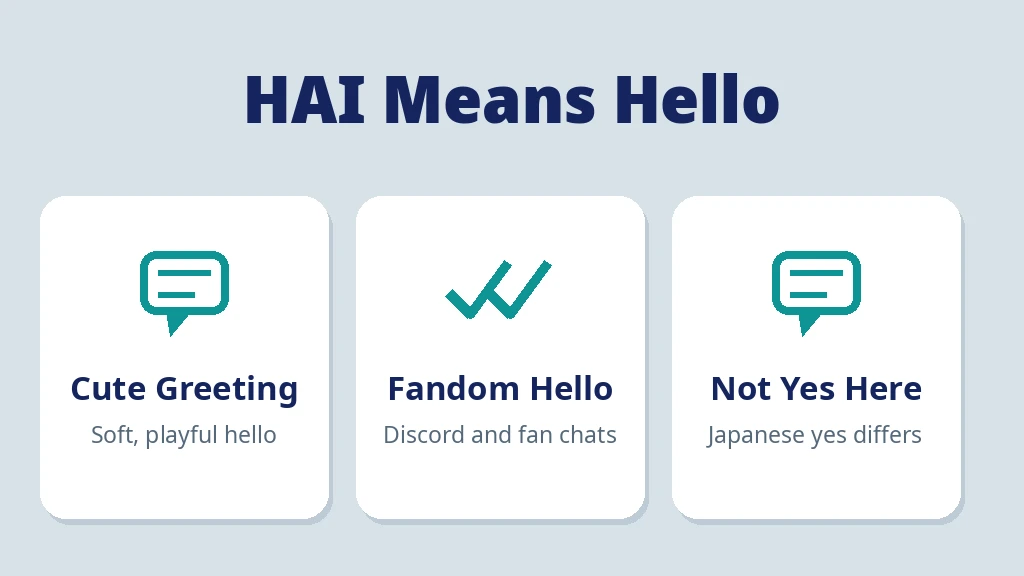
That tone is why hai shows up most often at the very start of a message. It is an entrance, not a reply buried in the middle of a chat. “Hai, how are you?” opens a conversation. “Haiii” with extra letters stretches the greeting further, making it even softer or more dramatic, depending on who sends it.
Hai is also deliberately a little unserious. People use it to sound adorable, bashful, or lightly funny, sincerely or with an ironic wink.
HAI Meaning in Easy Words
Think of hai as hi wearing a smile.
Imagine two friends starting a chat. One types “hi”, and the conversation starts normally. The other types “hai”, and the conversation starts with a little wave and a grin. The information is identical: both said hello. The feeling is different, and in online chats, where there is no face or voice, that feeling matters.
A useful test is to read hai out loud in a soft, friendly voice. That is the tone it carries in text. If you read it in a flat, businesslike voice, it will feel wrong, because hai does not belong in flat, businesslike messages.
Hai also tells you something about the sender’s mood. A plain hi can be neutral. Hai leans warm. It often means the sender is happy to talk to you, a little shy about starting, or playing up cuteness on purpose. The rest of the message usually confirms which one it is.
Where Is HAI Used?
Hai lives in friendly, informal online spaces. It is a greeting for people you like, not a greeting for a formal letter.
Common places:
- Private texts and DMs between friends
- Discord servers and gaming chats
- Instagram and TikTok comments
- Fandom spaces and fan communities
- Group chats where the mood is already playful
- Streaming chats and comment sections
Typical situations:
- Starting a chat with a friend you have not talked to today
- Greeting someone in a fandom or gaming server
- Opening a flirty or warm conversation softly
- Entering a group chat with a playful hello
- Replying to a story or post with a friendly wave
In fandom and gaming spaces, hai has a second flavour. Fans of anime and manga picked it up partly because hai is also a Japanese word, and the greeting carries a wink toward that culture. You do not need to be an anime fan to use hai, but in those spaces the word can signal shared taste as well as friendliness.
Why Do People Use HAI?
It softens the entrance
Starting a conversation can feel awkward, especially with someone new. Hai lowers the stakes. It says “I am friendly, I am not demanding anything, I just want to talk” in three letters.
It adds personality to a plain hello
Hi is neutral to the point of being invisible. Hai has character. It tells the reader something about the sender: playful, warm, a little shy, or deliberately cute.
It works as a social signal
In fandom, gaming, and Discord communities, hai can signal belonging. It is the kind of greeting people in those spaces recognise instantly, and using it says you know the room you are walking into.
It can be ironic on purpose
Sometimes hai is funny precisely because it is so sweet. Someone might type “haiii” in an exaggerated way to make a dramatic entrance, tease a friend, or play a character for a moment. The irony only works because everyone knows the sincere version first.
HAI on Social Media, in Fandom, and in Other Languages
On social media, hai is almost always the cute greeting, but two other meanings travel with the same letters, and both are worth knowing so you do not mix them up.
First, in Japanese, hai (pronounced “hi”) means “yes”. It is a polite way to confirm, agree, or acknowledge what someone said. Anime fans sometimes borrow that sound, which is part of why the English greeting hai feels anime-coded to some readers. But in an English chat, hai as a greeting is still just hello, not yes. If someone answers a yes or no question with hai, the Japanese reading may be in play, and the conversation will usually make that clear.
Second, in Hindi and Urdu, hai is a verb meaning “is”. A sentence like “yeh acha hai” means “this is good”. That is grammar, not slang, and it belongs to those languages, not to English texting. If you see hai inside a Hindi or Urdu sentence, it is doing the job of “is”, not greeting anyone.
A medical abbreviation, HAI, also exists for healthcare-associated infection, but it belongs to hospitals, never to chats.
Real-Life Examples of HAI
Here is how hai actually appears in chats and comments:
Example 1:
- Friend: “Hai, how was your day?”
- You: “Hey, it was good, how about yours?”
Meaning: A soft, friendly opening. The sender wants to chat, and the greeting sets a warm tone.
Example 2:
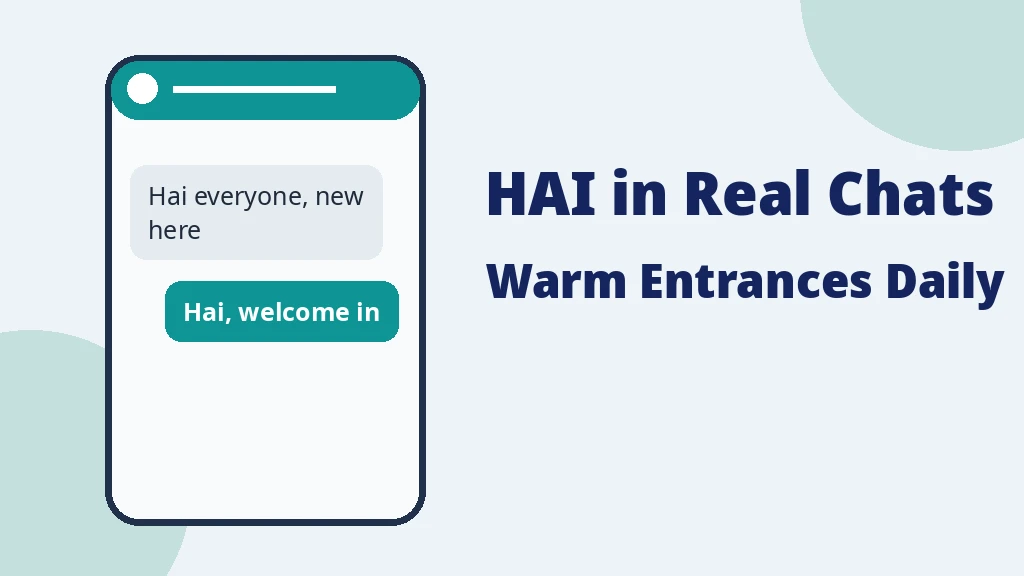
- New member in a Discord server: “Hai everyone, I am new here”
- Members: “Hai, welcome!”
Meaning: A shy, cute entrance into a community. The replies mirror the same greeting, which welcomes the newcomer in the room’s own style.
Example 3:
- Friend: “Haiii, guess what happened”
- You: “Tell me everything”
Meaning: An excited, dramatic entrance. The stretched spelling signals big news and playful energy.
Example 4:
- Comment on a photo: “Hai, you look lovely today”
- Poster: “Thank you so much”
Meaning: A warm compliment wrapped in a soft greeting. The hai makes the comment feel gentle rather than bold.
Example 5:
- Friend (joking): “Hai, it is me, your favourite person”
- You: “Oh no, what do you want”
Meaning: Ironic sweetness. The sender is playing up the cuteness for a laugh, and the friend plays along.
HAI vs Similar Internet Terms
| Term | Meaning | Feeling |
|---|---|---|
| HAI | Hello, said cutely | Soft, playful, warm |
| HI | Hello (standard) | Neutral, plain |
| HEY | Hello, attention call | Casual, can be bold |
| HIYA | Hello, cheerful variant | Bright, friendly |
| YO | Hello, casual call | Laid back, confident |
Key difference:
- Hai and hi mean the same thing. Hai adds softness, hi adds nothing.
- Hey can sound like a call for attention, while hai sounds like a wave.
- Hiya is cheerful and British in flavour, while hai leans cute and internet-flavoured.
- Yo is confident and laid back, while hai is shy or sweet. The two greetings suit very different moods.
And when a friendly chat winds down for the night, a different short greeting takes over. Here is what GN means in text, the shortcut people use to say good night without a long farewell.
HAI Variations You Should Know
Haiii and haiiii stretch the greeting by repeating the last letter. More letters usually mean more excitement, more sweetness, or more drama. It is the text version of drawing out a hello when you see a friend.
Hai vs hi is a tone choice, not a meaning choice. Use hi when you want a neutral greeting. Use hai when you want the greeting itself to feel warm or playful.
Hai as yes belongs to Japanese, not to English chats. If you are learning Japanese, hai is one of the first words you meet, and it means yes or “I understand”. Keep that classroom meaning separate from the English chat greeting.
Hai in Hindi and Urdu is the verb “is”. It is not slang in those languages. It is ordinary grammar, and it appears inside sentences, not as a standalone greeting.
How to Reply to HAI
Your reply depends on the tone of the hai you received.
If it is a friendly greeting: greet them back in your own style. “Hey, how are you?” or “Hai, how is your day going?” both work. Mirroring their hai is friendly, not required.
If it is a shy entrance: be welcoming. A warm reply makes the next message easier for someone who was nervous about starting.
If it is playful or ironic: play along lightly. A joke or a laugh emoji answers the tone without turning a bit of fun into a serious exchange.
If it opens a flirty chat: reply at the level you are comfortable with. Hai itself is not a strong signal, so let the rest of the conversation, not the greeting alone, guide you.
When to Use HAI (and When to Avoid It)
Good situations:
- Greeting friends in a relaxed chat or DM
- Entering a Discord, gaming, or fandom community warmly
- Starting a playful or affectionate conversation
- Commenting kindly on a friend’s post
- Softening a first message to someone new in a casual space
Avoid using HAI when:
- Writing to a teacher, boss, or anyone formal
- Sending a work email or a job application
- The conversation is serious, and a cute greeting could look careless
- You do not know the person well and a neutral hi would be safer
- Clarity matters more than tone, such as in an urgent message
Common Misunderstandings About HAI
Hai is not a typo for hi. It looks like one, but in chats it is usually deliberate. The spelling is the message: softer, cuter, more playful than hi.
Hai does not mean yes in English chats. Yes is the Japanese meaning. In an English text, hai is a greeting, and reading it as yes will confuse the conversation.
Hai is not only for girls. Guides sometimes frame hai as a greeting from girls, but people of all genders use it. The tone is cute, not gendered.
Hai is not childish by default. It is playful, and adults use it in fandom, gaming, and friendly chats all the time. Playful and childish are not the same thing.
Hai is not a secret code. Some slang hides a second meaning, but hai does not. It is hello, said softly, and that is the whole trick.
Frequently Asked Questions
What does HAI mean in text?
HAI means “hello” in texts and online chats. It is a cute, playful spelling of hi, used to open a conversation with a soft, friendly tone.
Is HAI just a misspelling of hi?
No. In chats it is usually deliberate. People type hai instead of hi on purpose, because the spelling itself adds warmth and playfulness to the greeting.
What does HAI mean in Japanese?
In Japanese, hai means “yes.” It is a polite way to confirm or agree. That is a separate language meaning, not the English chat greeting, which means hello.
What does HAI mean on Discord and in fandom?
It means the same cute hello as elsewhere, often with an extra fandom flavour. In Discord and fan communities, hai is a common warm entrance, sometimes nodding to anime culture.
Is HAI flirty?
Not by itself. Hai is soft and friendly, which can feel flirty in the right conversation, but on its own it is just a warm greeting. The rest of the chat decides the tone.
Should I reply “hai” back?
You can, and it is friendly to mirror the greeting, but it is not required. A normal “hey” or “hi” reply works just as well and keeps the conversation moving.
Related Texting Slang
Keep exploring the dictionary: when someone texts you HB, HBU in chats and texts, the HBY meaning, in plain words, SMH in chats and texts, the WYN meaning, in plain words.
Final Thoughts
Hai is a small word doing a gentle job. It means hello, spelled softer, and it turns an ordinary greeting into a warm entrance. Once you hear the tone behind the spelling, you will never read it as a typo again.
Just keep the language lines straight. In English chats, hai is hello. In Japanese, it is yes. In Hindi and Urdu, it is the verb “is”. The chat around it tells you which language you are in.
The reference works support the chat reading. Wiktionary lists hai as endearing internet slang for hi, and CyberDefinitions gives “Hello” as its quick answer for HAI, which is exactly how people use it when they open a conversation.