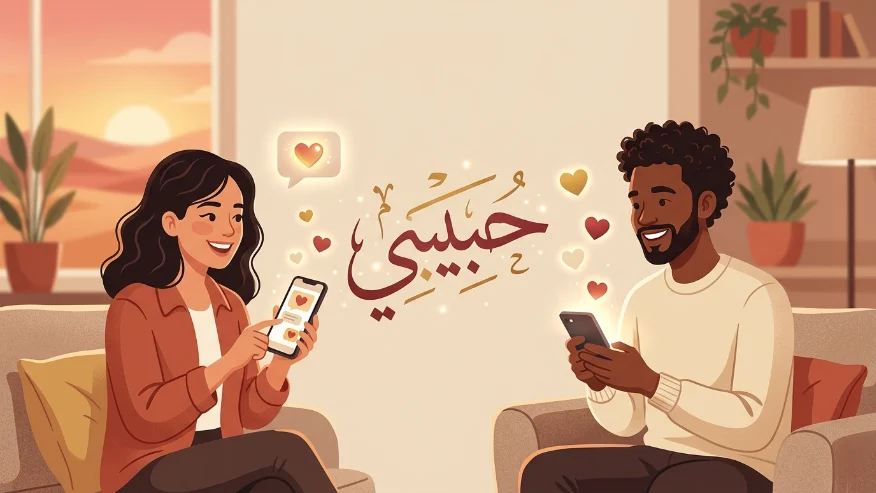
Habibi (حبيبي) is an Arabic term of endearment that translates to “my beloved,” “my dear,” or “my love.” It comes from the Arabic root word ḥubb (حب), meaning “love,” with the possessive suffix *-i* meaning “my.”
The term is used to express affection toward friends, family members, romantic partners, and even acquaintances in casual settings. The feminine version is habibti (حبيبتي).
You’ve probably heard it in a song, seen it in a TikTok caption, or received it in a text from a friend: habibi. But what does it actually mean?
The word has transcended its Arabic origins to become a global term of endearment, popping up everywhere from Netflix reality shows like Love Is Blind Habibi to viral social media posts. Whether you’re trying to understand a message, impress someone with your cultural knowledge, or just figure out if that DM is flirty or friendly this guide covers everything you need to know about the meaning of habibi.
By the end of this article, you’ll know exactly what habibi means, how to use it correctly, when to avoid it, and why it’s become one of the most recognizable Arabic words in the world.
Quick Answer Box
| Aspect | Details |
| Meaning | “My beloved,” “my dear,” “my love,” or “darling” |
| Language | Arabic |
| Root | Ḥubb (حب) meaning “love” |
| Pronunciation | ha-BEE-bee |
| Feminine Form | Habibti (حبيبتي) |
| Used For | Friends, family, romantic partners, acquaintances |
| Common Platforms | WhatsApp, TikTok, Instagram, Snapchat, text messaging |
| Tone | Affectionate, warm, playful, casual |
What Does Habibi Mean?
Literal Translation
At its most basic level, habibi translates to “my beloved” or “my dear” in English. The word is constructed from two parts:
- Habib (حبيب) – meaning “beloved” or “loved one”
- -i (ي) – the possessive suffix meaning “my
So literally, habibi means “my beloved one.
The Feminine Form: Habibti
Arabic is a gendered language, so the term changes depending on who you’re addressing:
| Form | Meaning | Used For |
| Habibi (حبيبي) | My beloved (masculine) | Males |
| Habibti (حبيبتي) | My beloved (feminine) | Females |
In everyday usage, however, younger generations often use habibi in a gender-neutral way especially in casual texts and social media making it less about grammatical correctness and more about the vibe.
Context & Usage
Who Uses Habibi?
Habibi is used by:
- Romantic partners – as a pet name equivalent to “baby” or “sweetheart”
- Family members – parents to children, siblings to each other
- Close friends – as a casual term of endearment like “bro” or “buddy”
- Acquaintances and strangers – in some Arabic-speaking cultures, it’s used to soften interactions, similar to “hon” or “sweetie” in parts of the US
Where Did Habibi Come From?
The term comes from the Arabic root ḥ-b-b (حبّ), which revolves around love and affection. Arabic, known for its poetic richness, uses this root to form numerous words related to love, passion, and admiration. Historically, habibi has been deeply embedded in Arabic poetry, music, and daily conversation for centuries.
The word gained international recognition in 1996 with Egyptian singer Amr Diab’s hit song Nour El Ain, where he repeatedly sings “Ya Habibi, Ya Habibi” in the chorus. Since then, it has appeared in countless songs, movies, and TV shows, cementing its place in global pop culture.
Tone-Shifting Power
As one language expert puts it, habibi is a “tone-shifter” it changes how a sentence feels without changing what it says.
Compare these two statements:
- “Relax.” – Blunt, direct, possibly cold.
- “Relax, habibi.” – Softer, warmer, almost affectionate.
The word adds a layer of emotional warmth and familiarity that transforms even the most straightforward command into something caring.
Real-Life Examples
Here are five realistic conversation examples showing how habibi is used in everyday situations:
Example 1: Between Friends (Casual)
Ahmed: “Habibi, you coming to the game tonight?”
Sam: “For sure, bro. What time?”
Ahmed: “7 PM. Don’t be late, habibi.”
Example 2: Romantic Context
Layla: “Goodnight, habibi. Sleep well.”
Karim: “Goodnight, habibti. Dream of me.”
Example 3: Parent to Child
Mother: “Habibi, did you eat breakfast before school?”
Child: “Yes, Mama.”
Mother: “Good. I packed you a snack, habibi.”
Example 4: Playful/Teasing
Nadia: “What are you doing, habibi?”
Omar: “Just scrolling. Why?”
Nadia: “You’ve been on your phone for an hour. Come hang out.”
Example 5: Softening a Complaint
Manager: “Hey, don’t leave your coffee cups on the desk, habibi.”
Employee: “Sorry, boss. Won’t happen again.”
Platform-Specific Meaning
Habibi on WhatsApp
On WhatsApp, habibi is commonly used as a greeting or sign-off in personal chats. It’s similar to saying “hey buddy” or “my friend.” For example:
- “Habibi, how are you?”
- “Thanks for the help, habibi.”
Habibi on TikTok
TikTok has played a massive role in popularizing habibi worldwide. The term appears in:
- Captions – often paired with affectionate or playful content
- Comments – used to hype up creators or show appreciation
- Viral sounds – songs and audio clips featuring the word “habibi”
The hashtag #habibi has billions of views, with content ranging from couple goals to comedy skits. The 2021 song “Habibi” by Ricky Rich and ARAM Mafia went viral on TikTok, charting in multiple countries and introducing the term to millions of new listeners.
Habibi on Snapchat
On Snapchat, habibi is often used in:
- Private messages between friends
- Stories – as a caption or overlay text
- Filter captions – sometimes written as “7abibi” (where the “7” represents the Arabic letter ح)
Snapchat users frequently pair habibi with other Arabic terms of endearment like hayati (my life) and ruhi (my soul).
Habibi on Instagram
Instagram sees habibi used across:
- DM exchanges – as a friendly or flirty opener
- Post captions – often in travel, food, or lifestyle content
- Comments – to show appreciation or affection toward creators
The term has become a trendy way to add a personal, warm touch to online interactions.
Alternative Meanings & Variations
Other Arabic Terms of Endearment
| Term | Meaning |
| Habibti | My beloved (feminine) |
| Hayati | My life |
| Rohi / Ruhi | My soul |
| Albi | My heart |
| Ya Amar | My moon (beautiful) |
Habibi in Non-Romantic Contexts
- Between strangers – In some regions like Lebanon, habibi is used to soften interactions with strangers, much like “hon” or “sweetie” in American English.
- As a surname – Habibi is also a common family name in Arabic-speaking countries.
- In business names – Restaurants, bands, and dance troupes often use Habibi in their names.
The “7abibi” Spelling
On the internet, you’ll sometimes see habibi written as 7abibi. The “7” represents the Arabic letter ح (ḥa), which doesn’t have a direct equivalent in the Latin alphabet. This is part of a broader system called Arabizi writing Arabic using Latin letters and numbers.
Related Terms & NLP Variations
To fully understand habibi, it helps to know related terms and how they’re used:
| Term | Meaning | Relation to Habibi |
| Hub (حب) | Love | The root word |
| Habib (حبيب) | Beloved / loved one | The base noun |
| Habiba (حبيبة) | Beloved (feminine) | Feminine base |
| Mahbub (محبوب) | Loved / beloved | Passive participle |
| Ya Habibi | Oh my beloved | Exclamatory form |
These variations show how the root *ḥ-b-b* generates a rich family of words related to love and affection in Arabic.
How to Respond to Habibi
If someone calls you habibi, here’s how you can respond depending on the context:
Casual / Friendly Response
- “Hey habibi! What’s up?”
- “Thanks, habibi!”
- “Same to you, habibi.”
Romantic Response
- “Habibti, you’re so sweet.”
- “I love you too, habibi.”
- “You’re my everything, habibi.”
Playful Response
- “Habibi? You must want something.”
- Don’t ‘habibi’ me unless you mean it.
If You’re Not Sure What to Say
A simple smile and “thank you” works perfectly. The word is meant to convey warmth, so responding with warmth even a smile is always appropriate.
Misinterpretations & Common Mistakes
Mistake 1: Using It Too Casually in Formal Settings
Habibi is colloquial. It’s generally not appropriate to address a boss, a senior colleague, or someone you’ve just met in a professional context with “habibi.”
Mistake 2: Assuming It’s Always Romantic
While habibi can be romantic, it’s just as often used platonically between friends and family members. Context matters.
Mistake 3: Using the Wrong Gender Form
In formal Arabic, using habibi for a woman is grammatically incorrect you should use habibti. However, in casual, modern usage especially among younger generations habibi is often used gender-neutrally.
Mistake 4: Overusing It
Like any term of endearment, overusing habibi can make it lose its meaning. Use it genuinely, not as a filler word.
Mistake 5: Using It With Someone Who Might Not Appreciate It
Not everyone is comfortable with terms of endearment from people they don’t know well. Gauge the other person’s comfort level before dropping a “habibi.”
When NOT to Use Habibi
| Situation | Why Not |
| Formal business meetings | Too casual; may come across as unprofessional |
| With senior colleagues or bosses | Can be seen as disrespectful |
| With strangers in Western contexts | May be misunderstood or make the other person uncomfortable |
| In written formal communication | Not appropriate for emails, letters, or official documents |
| When you’re unsure of the relationship | Better to err on the side of caution |
Usage Tips
Tip 1: Match the Tone
If someone uses habibi with you first, it’s usually safe to use it back. If you’re initiating, start with a warm, friendly tone.
Tip 2: Read the Room
In Arabic-speaking cultures, habibi is common in casual settings but rare in formal ones. In Western contexts, it’s often seen as bizarre or trendy use it accordingly.
Tip 3: Practice the Pronunciation
It’s pronounced ha-BEE-bee (not “ha-BIB-ee”). Getting the pronunciation right shows respect for the language and culture.
Tip 4: Use the Feminine Form When Appropriate
If you’re addressing a woman and want to be grammatically correct, use habibti. It shows cultural awareness and attention to detail.
Tip 5: Don’t Force It
If it doesn’t feel natural, don’t use it. Authenticity matters more than trying to sound cool.
FAQs
1. What does habibi mean in English?
Habibi translates to “my beloved,” “my dear,” or “my love” in English.
2. Is habibi for a girl or boy?
Habibi is the masculine form used for males. The feminine form is habibti, used for females.
3. Can you call a friend habibi?
Yes! Habibi is commonly used between friends as a term of endearment similar to “bro” or “buddy.”
4. Is habibi romantic?
It can be romantic, but it’s not exclusively so. Context determines whether it’s romantic, platonic, or familial.
5. What does habibi mean in texting?
In texts, habibi is used as a warm greeting or sign-off, similar to “hey friend” or “my dear.”
6. What is the difference between habibi and habibti?
Habibi is masculine (used for males), and habibti is feminine (used for females). Both mean “my beloved.
7. What does ya habibi mean?
Ya habibi” means “oh my beloved” and is used as an exclamation or affectionate address.
8. Is habibi used in the Quran?
While the root word appears, the specific possessive form “habibi” is not prominently featured in the Quran in the same way it’s used colloquially today.
9. Can I use habibi if I’m not Arabic?
Yes, but use it respectfully. It’s widely used by non-Arabic speakers, especially in multicultural and online spaces. Just be mindful of context and tone.
10. What does habibi mean in rap?
In rap and hip-hop, habibi is used to mean “my love” or as a term of endearment, often in songs with Middle Eastern influences.
11. Does habibi mean “baby”?
In romantic contexts, yes it can be used similarly to “baby” or “sweetheart.”
12. What is the opposite of habibi?
There isn’t a direct opposite, but the antonym in terms of sentiment would be something like ‘aduww (enemy) or ghareeb (stranger).
Conclusion
Habibi is far more than just a word it’s a cultural bridge, a tone-shifter, and one of the most versatile terms of endearment in the Arabic language. Whether you’re using it with a romantic partner, a close friend, or a family member, it conveys warmth, affection, and a sense of closeness that transcends language barriers.
From its roots in the Arabic word for love (ḥubb) to its global popularity on platforms like TikTok, WhatsApp, and Snapchat, habibi has become a truly international expression of endearment. Just remember: context matters, tone is everything, and when in doubt, follow the other person’s lead.
So next time someone calls you habibi or you feel like using it yourself you’ll know exactly what it means, how to respond, and when it’s the right moment to let that word do its magic.