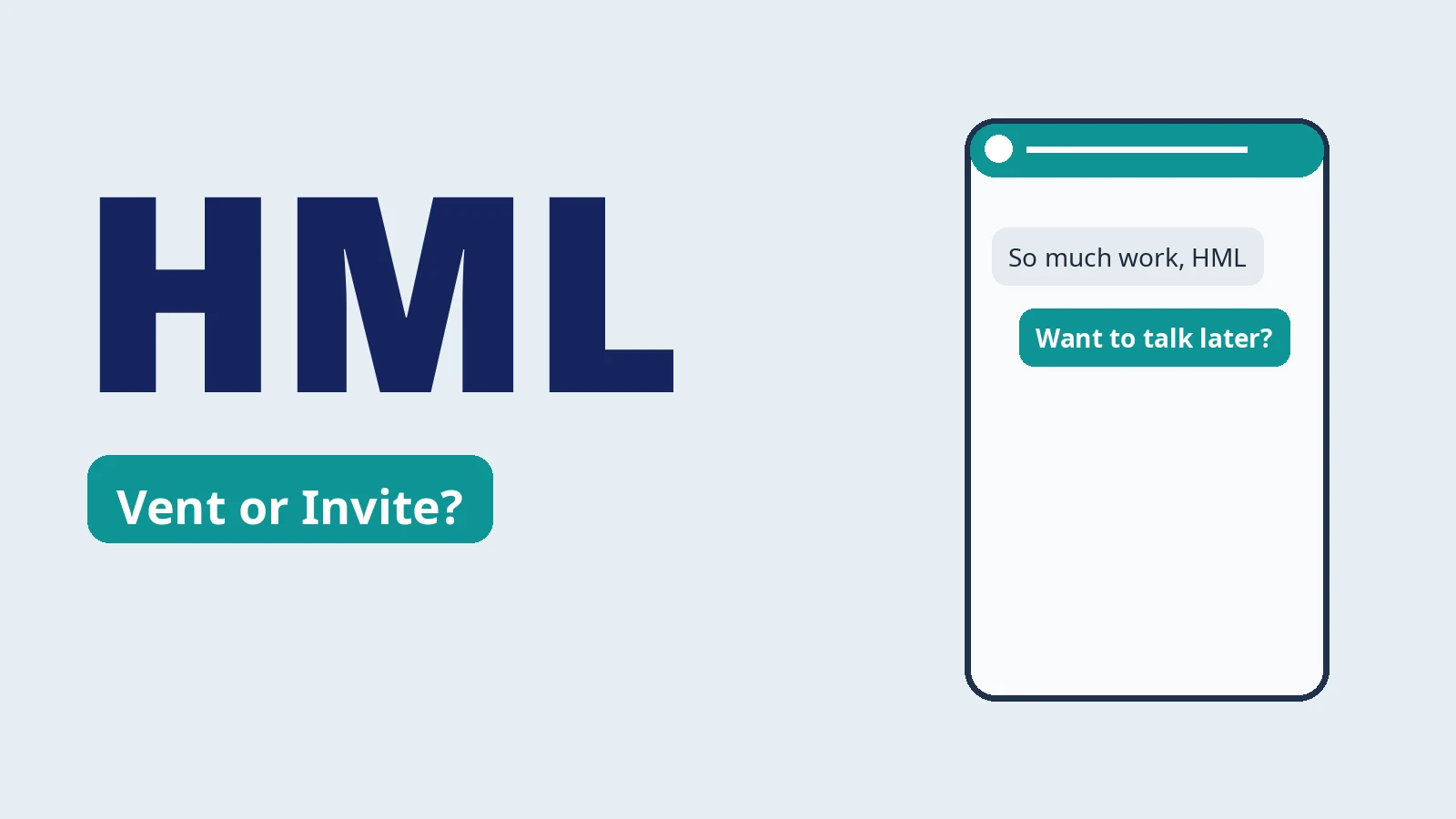
Your friend texts “HML” and you freeze. Are they venting about a terrible day, or are they asking you to call them?
Here is the short answer: HML means two real things, “Hate My Life” and “Hit My Line”, and the sentence around it tells you which one it is. Neither reading is a mistake or a rare joke sense. Both are fully documented, and a single lead article would be wrong somewhere.
In this guide you will learn the hml meaning in text, how CyberDefinitions ranks the two readings, how Snapchat, Instagram, and plain texting split between them, and how to reply to each one correctly.
What Does HML Mean in Text?
HML carries two meanings that live side by side in everyday texting.
“Hate My Life” is a vent. The sender is frustrated, overwhelmed, or fed up with a situation they cannot control, and HML compresses that feeling into three letters. It is usually exaggeration about an everyday annoyance, not a literal statement about their whole life.
“Hit My Line” is an invitation. The sender wants you to call or message them, often to move a conversation from text to a phone call. “Line” here means a phone line, so “hit my line” is a direct way of saying “call me”.
Quick definition: HML means “Hate My Life” when it vents frustration, and “Hit My Line” when it invites a call or message. CyberDefinitions lists “Hate My Life” first and “Hit My Line” second, but the platform and the sentence, not the dictionary order, decide any single case.
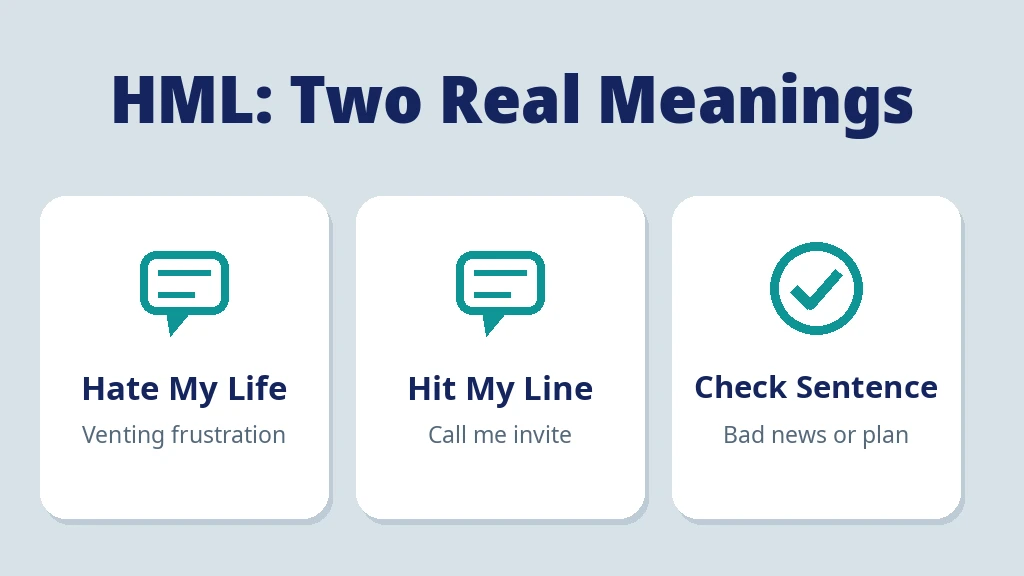
CyberDefinitions is unusually clear on this term. Its HML page gives the quick answer as “Hate My Life” or “Hit My Line”, describes the first as a statement from someone unhappy with a situation beyond their control, and describes the second as a wish to move from text chat to a phone call. Its summary table lists “Hate My Life” as the first definition and “Hit My Line” as the second definition. That two sense structure is the backbone of this article.
Google’s niche results agree that both senses are real, but they flip the ranking by source. Some guides lead with “Hit My Line”, especially for Instagram and TikTok, while others lead with “Hate My Life”, especially for Snapchat and plain texting. That flip is not a contradiction to resolve by picking a winner. It is evidence that the two senses genuinely share the term, and that platform is part of the meaning.
HML Meaning in Easy Words
Think of HML as two different sentences wearing the same three letters.
In the venting sentence, HML means “ugh, this is awful”. Someone misses a bus, fails a test, or gets called on in class unprepared, and HML is the sigh at the end of the story. It asks for sympathy, not for a phone call.
In the invitation sentence, HML means “call me”. Someone is free later, wants to catch up, or wants to switch from typing to talking, and HML is the open door. It asks for contact, not for sympathy.
In the simplest words:
HML = “I hate this situation” or “Call me”. Read what came before it.
The test is simple. If HML follows bad news, it is a vent. If HML follows a plan, a free evening, or a “when you get home”, it is an invitation. Most cases pass this test in seconds.
Where Is HML Used?
HML is a genuinely common piece of slang, far more mainstream than its cousin HMJ, and it appears across almost every chat surface:
- Snapchat stories and chats, where both senses are common
- Instagram DMs, captions, and stories, leaning toward the invitation sense
- TikTok captions and comments, leaning toward the invitation sense
- Plain one to one texting, leaning toward the venting sense
- Group chats, where a vent can also double as a call for support
Typical situations for “Hate My Life”:
- Complaining about homework, work, or a bad day
- Reacting to an embarrassing moment, like being called on unprepared
- Exaggerating a small annoyance for comic effect among friends
Typical situations for “Hit My Line”:
- Ending a story with an open invitation to call later
- Asking a friend to switch from texting to a phone call
- Leaving a casual “HML when you are free” after making plans
Why Do People Use HML?
It vents without a long explanation
Sometimes a full paragraph about a bad day is too much effort, and too much vulnerability. HML lets the sender name the feeling, invite sympathy, and move on, all in three letters. Friends understand the exaggeration and respond with comfort or humour, which is usually all the sender wanted.
It invites without sounding needy
Writing “please call me, I really want to talk” can feel heavy. HML keeps the invitation light and casual, which suits the tone of Snapchat and Instagram, where a low pressure invite gets a better response than a formal one.
It belongs to the friend group
Like FML, its famous cousin, HML signals membership in casual texting culture. Using it correctly, in the right sense at the right moment, shows you speak the same shorthand as your friends.
Real-Life Examples of HML
Here is how HML actually shows up, with each example labelled by its sense:
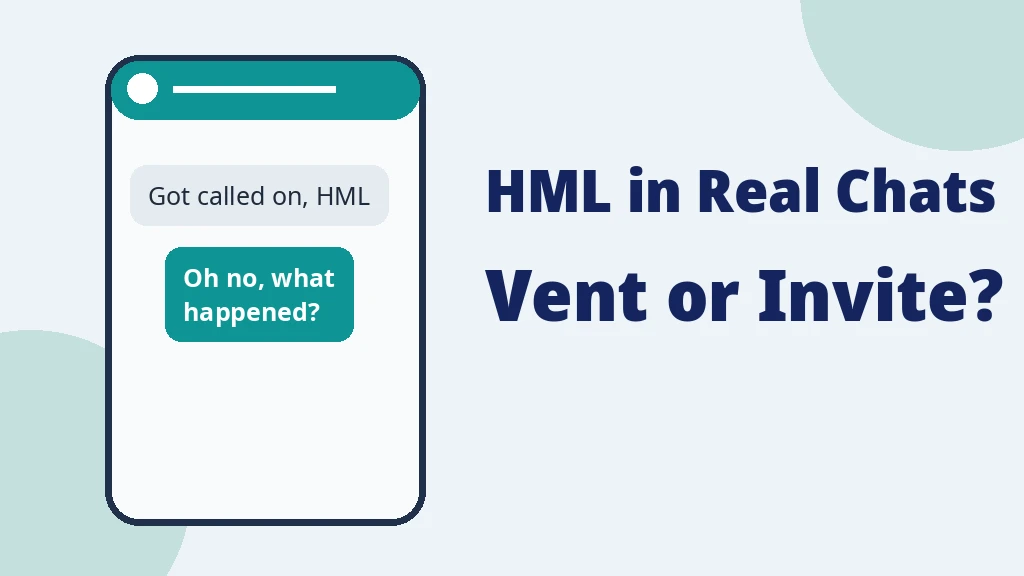
Example 1 (Hate My Life):
- Friend: “Got called on in class and I had not been paying attention at all. HML”
- You: “Oh no, what did you say?”
Meaning: Venting about an embarrassing moment. The reply should offer sympathy, not a phone call.
Example 2 (Hit My Line):
- Friend: “I am free after seven tonight, HML”
- You: “Will do, I will call you then”
Meaning: Invitation to call. The reply should confirm contact, not comfort.
Example 3 (Hate My Life):
- Friend: “They ran out of ice cream sandwiches. HML”
- You: “Tragic, truly tragic”
Meaning: Comic exaggeration about a tiny annoyance. The humour is the point.
Example 4 (Hit My Line):
- Friend: “Well, I will be at the bar with the girls. HML when you get home”
- You: “Got it, I will ring you later”
Meaning: Invitation tied to a time. This is the classic CyberDefinitions example pattern, where HML clearly means call me.
Example 5 (Both at once):
- Friend: “I have so much work to do. HML!”
- You: “Want to talk it through later?”
Meaning: Deliberately double. The sender is venting and, by adding HML, also leaving the door open for a call. CyberDefinitions itself notes this overlap, where one HML can carry both feelings.
HML vs Similar Terms
| Term | Meaning | Difference from HML |
|---|---|---|
| HML | Hate My Life or Hit My Line | Two settled senses, context decides |
| FML | F*** My Life | Vent only, stronger and profane |
| LML | Love My Life | Opposite of the venting sense |
| HMU | Hit Me Up | Invitation only, no venting sense |
| HMJ | Hit My Jack, or joking sense | Contested cousin, much less settled |
Key difference: FML only vents and HMU only invites, but HML does both, which is exactly why it confuses people. If you want only one of those jobs done, use FML or HMU. If you use HML, accept that your reader must read the sentence to know which job you meant. For the channel an invitation often moves to, here is what DM means in text and how a direct message differs from a phone call invite.
HML on Snapchat, Instagram, TikTok, and in Plain Texts
Platform tilts the odds, even though it never settles a single case on its own.
On Snapchat, both senses thrive, and several guides specifically associate Snapchat HML with venting. A Snapchat story about a bad day with HML attached is almost certainly “Hate My Life”, while a Snapchat story ending in HML with no bad news is more likely an invitation to call.
On Instagram and TikTok, the invitation sense leads. Captions, stories, and DMs use HML to say “contact me”, and the venting sense appears less often there, usually as a hashtag on a frustration post rather than as a standalone message.
In plain texting, the venting sense leads. Friends text HML after bad news to share frustration, and the invitation sense usually needs a clearer setup, like a time or a plan, to be read that way.
The “Help Me Lord” note: a few guides list “Help Me Lord” as a third, humorous or dramatic HML sense. It is real but minor, and it works like the dramatic “Help Me Jesus” reading of HMJ: an exaggerated cry when something goes wrong. Treat it as a rare variant, not a third equal meaning.
How to Reply to HML
If it was “Hate My Life”: offer sympathy first. “That sounds rough, what happened?” or a light joke about the small annoyance both work, because the sender wanted acknowledgement, not a solution.
If it was “Hit My Line”: confirm contact. “I will call you tonight” or simply calling answers the invitation. Replying with sympathy to an invitation will confuse the sender, because you answered a question they never asked.
If both readings fit: cover both in one reply. “Want to talk it through later?” sympathises with the vent and accepts the invitation at once, which is why it is the safest reply to a genuinely double HML.
If you are worried about a real cry for help: take it seriously. Most HML vents are exaggeration about everyday annoyances, but if a friend’s messages suggest real distress, skip the slang decoding and check in directly. A caring question costs nothing and matters more than getting the abbreviation right.
When to Use HML (and When to Avoid It)
Good situations:
- Venting to close friends about a frustrating but ordinary day
- Inviting a friend to call when you are free later
- Adding comic exaggeration to a small annoyance in a group chat
- Ending a story with a light, casual invitation
Avoid using HML when:
- The message is serious and a misread vent could delay real help
- You are writing formally, where both senses read as too casual
- The reader does not know you well enough to tell vent from invitation
- You only mean one sense and the other reading would change the message
Common Misunderstandings About HML
HML does not have one meaning. Any guide that lists only “Hate My Life” or only “Hit My Line” is incomplete. Both are documented by CyberDefinitions, and both are in daily use.
HML is not the same as FML. FML is profane and vents only. HML can vent, but it can also invite, and it is milder in tone.
HML is not always negative. The invitation sense is warm and social. Reading every HML as frustration will make you miss friendly invitations.
HML is not always an invitation. The reverse mistake is just as common. Replying “I will call you” to a vent about a bad day misses the sympathy the sender actually wanted.
Frequently Asked Questions
What does HML mean in text?
HML means “Hate My Life” or “Hit My Line”. The first vents frustration about a situation, and the second invites the reader to call or message the sender.
Which HML meaning comes first?
CyberDefinitions lists “Hate My Life” first and “Hit My Line” second, but that order does not settle any single message. The sentence and the platform decide which reading fits.
What does HML mean on Snapchat?
On Snapchat, HML can mean either sense, but several guides associate Snapchat HML most often with venting, as in “Hate My Life” after a frustrating moment.
What does HML mean on Instagram?
On Instagram and TikTok, HML leans toward “Hit My Line”, an invitation to contact the sender, especially in stories, captions, and DMs.
How do you reply to HML?
Reply with sympathy to a vent, and confirm contact to an invitation. If both readings fit, a reply like “Want to talk it through later?” covers both at once.
Is HML the same as FML?
No. FML vents only and is profane, while HML can vent or invite and is milder. HML is also the opposite of LML, which means “Love My Life”.
Final Thoughts
HML is one of the few slang terms where the honest answer is genuinely two answers. “Hate My Life” vents, “Hit My Line” invites, and both are documented, common, and easy to confuse if you only know one of them.
Now you know the test that settles almost every case: bad news before it means a vent, a plan or a free evening before it means an invitation, and a reply that covers both will save you when the two overlap. Keep that test in mind, and HML will stop being a coin flip.
The two sense structure is confirmed by CyberDefinitions, whose HML entry gives “Hate My Life” as the first definition and “Hit My Line” as the second, with examples showing how one message can even carry both at once.